 You Fine Sculpture
The purpose of this article is to help you create a practical checklist for selecting reliable bronze deer sculpture suppliers: from clarifying your needs to evaluating professionalism, craftsmanship, price, delivery time, service, and case studies. This article will guide you step-by-step, giving you a clear understanding of the process.
| Section | Core Question | Key Point |
| 1. Why the supplier matters more than the deer | How important is the supplier? | A deer at your main entrance affects schedule and image; use clear standards to filter reliable suppliers. |
| 2. Clarify your project needs first | What exactly do I need? | Before contacting suppliers, clarify scene, quantity, size, style, budget, timeline, and prepare site photos + reference images. |
| 3. Professionalism & customization | Are they truly professional? | Choose a supplier focused on bronze, able to customize from drawings/3D, with real design/art project experience. |
| 4. Craftsmanship & quality | Is the workmanship solid? | Check bronze grade and wall thickness, full production process, patina quality, details/proportions, and final QC. |
| 5. Price & transparency | Is the price reasonable? | Beware “too cheap”; ask for itemized quotes, compare under the same size/process, and consider long‑term use cost. |
| 6. Lead time, service & communication | Is the process controllable? | Ask for a clear timeline in the contract, fast and professional replies, progress photos, and a concrete after‑sales plan. |
| 7. Cases & reputation | Is their track record reliable? | Look for real project photos, professional client types, and evidence of good reviews and repeat orders. |
| 8. Local vs. China factory | Which should I choose? | For small, urgent, off‑the‑shelf needs → local; for multiple pieces, custom work and budget control → professional factories in China. |
| 9. Question checklist | What exactly should I ask? | Systematically ask about cases, materials/structure, size/effects, process, quote breakdown, lead time/shipping, installation, after‑sales, and future expansion. |
| 10. Conclusion: an “invisible partner” | What mindset should I have? | Treat the supplier as a long‑term project partner: let them handle tech and details, you focus on placement and aesthetics. |
1. Why Choosing the Right Supplier is More Important Than Choosing the Right Deer
When many people buy a bronze deer statue for the first time, their initial thought is:
“I want a beautiful deer.”
Those who have actually worked on such projects know that the more crucial question is:
“I need to find a reliable supplier.”
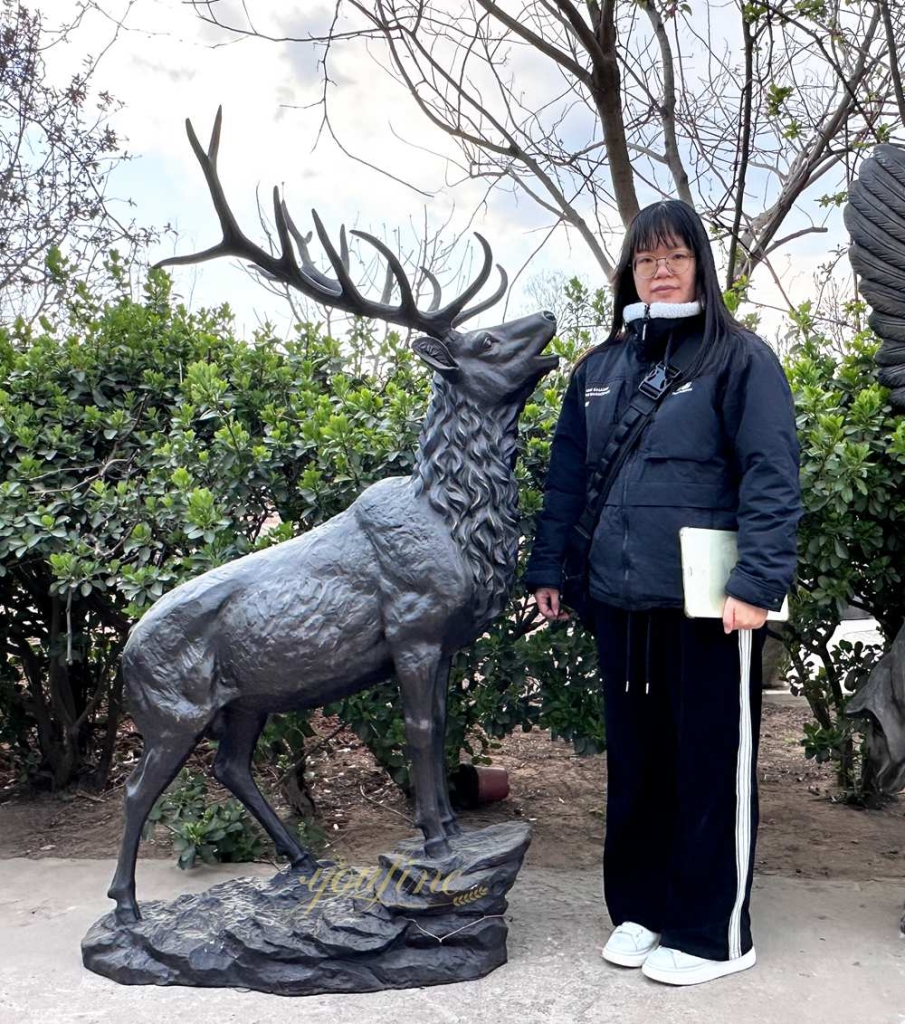
Bronze deer statues are usually placed in prominent locations such as villa courtyards, manor lawns, hotel gardens, community entrances, and commercial squares, serving as the “face” of a project. If problems arise—such as incorrect size, significant color discrepancies, fading and rusting shortly after being placed outdoors, or indefinite delivery delays—you not only lose money, but you may also miss opening deadlines, handover dates, and even damage the entire project’s image.
Therefore, instead of scrambling to find a supplier online at the last minute, it’s better to use a systematic approach to evaluate suppliers from the start and mitigate risks.
2. Step One: Clarify Your Project Requirements 🎯
Before discussing “how to choose a supplier,” there’s a frequently overlooked prerequisite:
You need to first understand what kind of deer you actually need.
| Dimension | Key Question | Keyword Hints |
| 1. Application Scene | Where will it be placed, for what? | Private garden / Estate entrance / Residential / Commercial |
| 2. Quantity & Grouping | How many pieces, how to combine? | Single / 2–3 pcs family / Deer herd main feature |
| 3. Size | Natural look or strong impact? | <1m decorative / 1.5–1.8m life-size / >2m monumental |
| 4. Style Positioning | Realistic, artistic, or modern? | Realistic details / Abstract art / Modern minimal |
| 5. Budget 💰 | What is the budget range? | Decides size, complexity, and quantity |
| 6. Time Schedule | When must it be delivered? | Opening / Handover / Event; urgent or flexible |
| 7. Site & Environment | How big is the site, what style? | Site plan / Photos / European / Modern / Natural |
| 8. Reference & Preference 📁 | Any preferred reference cases? | Reference images / Target height / Favorite posture or style |
2.1 Usage Scenarios
Different scenarios have completely different requirements for the size, style, and craftsmanship of the deer:
Private Courtyards / Villa Gardens
Usually, the goal is for the deer to blend in with the environment: natural, elegant, with a touch of artistry but not too exaggerated.
More attention is paid to details and texture, and people are willing to spend a little more.
Manor / Ranch / Hunting Ground Entrance
The goal is to create a welcoming and impressive atmosphere. Commonly, 1-2 male deer are paired with several female deer and fawns.
The size is relatively larger, emphasizing the overall ambiance.
Residential Community Entrance / Sales Office / Public Landscape
Emphasis is placed on iconic design, recognition, and durability.
High foot traffic requires consideration of safety, impact resistance, and ease of maintenance.
Commercial Projects (Shopping Mall Atriums, Scenic Areas, Hotels)
Strong visual impact, suitable for combination installations or artistic designs.
Often combined with lighting and landscape features to tell a story and create a talking point.
2.2 Quantity and Size
Quantity:
Single deer: Suitable for doorways, corners, and entrance gardens.
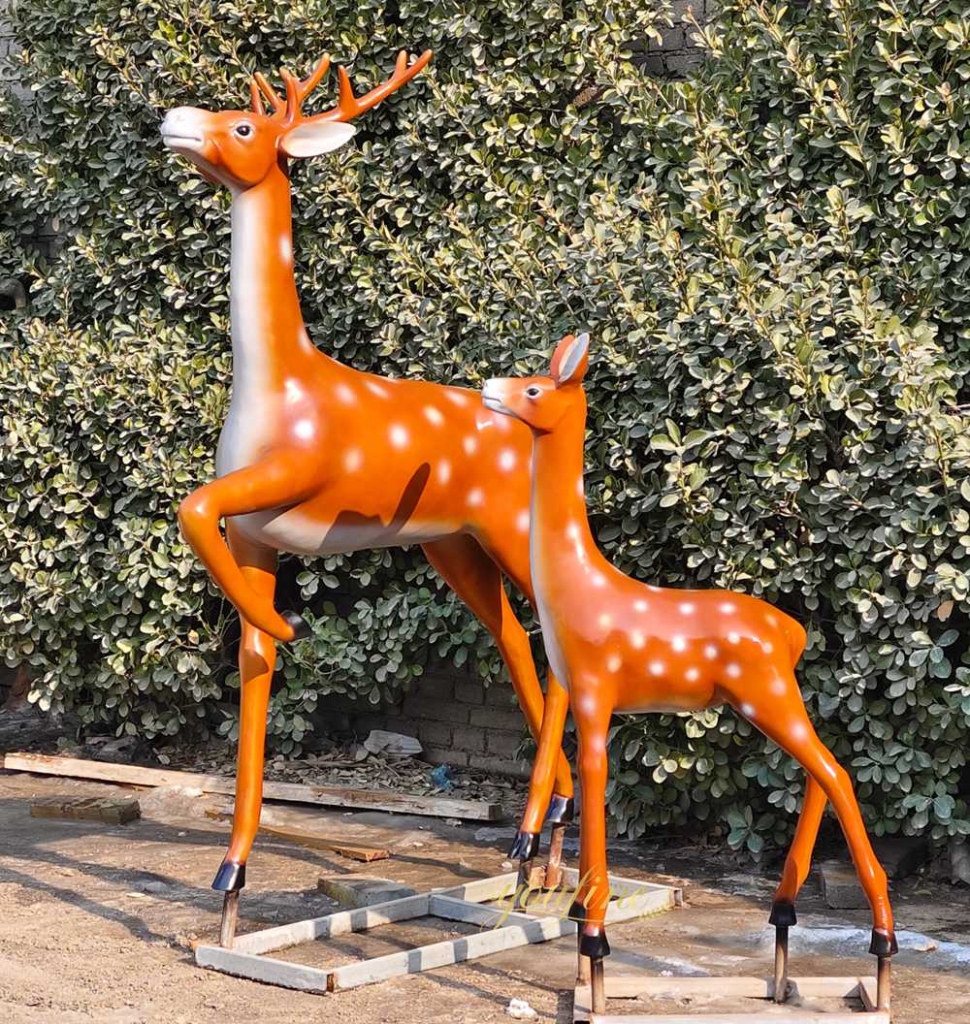
Two or three deer: Suitable for courtyards and lawn corners, creating a “small family” atmosphere.
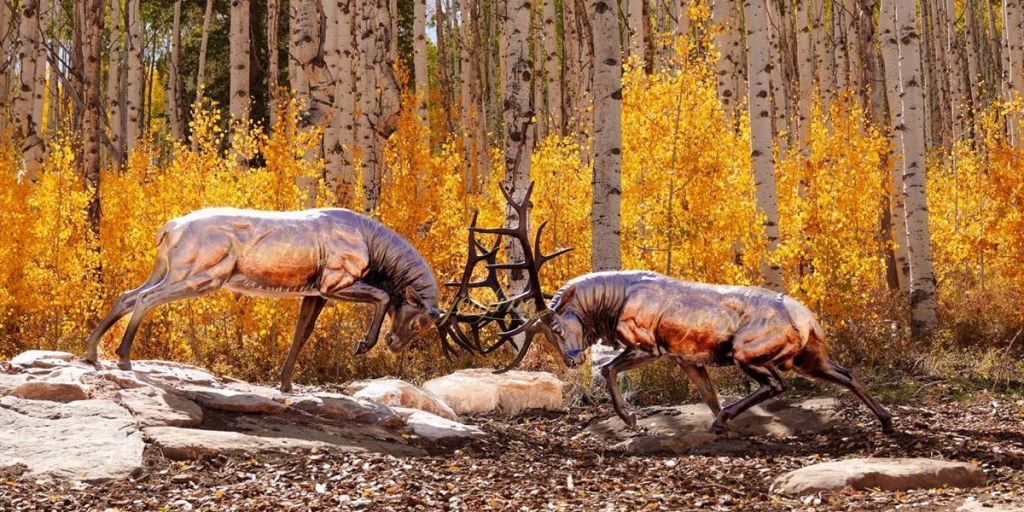
A whole group of deer: Suitable for large lawns, hillsides, and main entrance axes, serving as the project’s main visual element.
Size (common references):
Close to the height of a real deer (1.5–1.8m) → Natural appearance, suitable for most courtyards and entrances.
Enlarged size (2m and above) → More monumental and visually impactful.
Small size (less than 1m) → More decorative, can be used with flower beds and children’s areas.
2.3 Style and Positioning
Realistic style:
Emphasizes muscle, fur, and antler texture, creating a strong sense of realism.
Artistic / Abstract style:
Simplified lines, focusing on form and posture, with an artistic sculpture feel.
Modern minimalist style:
Geometric and blocky, suitable for modern architecture and minimalist gardens.
When choosing a supplier, check if they have mature case studies in the style you require.
2.4 Budget and Time
Budget:
This determines the size, complexity of craftsmanship, and quantity you can choose.
When you have a limited budget, it’s even more important to find a professional supplier to help you balance “cost-effectiveness.”
Time:
Do you have a specific “required delivery date”? For example, for an opening ceremony, property handover, or holiday event.
Bronze sculptures have a fixed production cycle; the approach for urgent projects and projects with more flexible timelines will differ.
2.5 Information to Prepare Before Communicating with Suppliers
It’s recommended to prepare a “small information package” in advance, including:
Site photos or overall site plan/elevation drawings
Reference images of the deer effect you like (even if they are images saved from the internet)
Approximate height/size requirements
Quantity estimate (single deer / several deer / a herd of deer)
Project completion timeline
Budget range
The clearer you are in this step, the more accurate the solutions and quotes the supplier will provide, and the easier it will be for you to distinguish who is truly professional and who is just giving vague answers.
3. Core Dimension One: Assessing “Professionalism” and Customization Capabilities
A reliable bronze deer supplier must first be sufficiently professional in the field of “bronze” and “sculpture,” rather than simply selling them as a side business.
| Dimension | Key Checkpoints | Keyword Hints |
| 1. Bronze Focus | Focus on bronze sculpture or not | Bronze as main category / Bronze animals / Garden bronze / Not “do everything.” |
| 2. Custom Capability | Focus on the bronze sculpture or not | Based on drawing / 3D / Adjust pose, size, color, patina / Not only stock models |
| 3. Scene-based Solutions | Able to design deer group scheme | Villa / Residential / Mall / Storytelling deer group (head-up, grazing, fawns) |
| 4. Work with Designers | Able to design a deer group scheme | Cases with landscape/architect/artist / Understand drawings & terms |
| 5. Professional Attitude | Give suggestions, take responsibility | Structure & safety advice / Proportion & sightline / Not just “do whatever you say” |
3.1 Focus on Bronze Sculptures
Check their website or product catalog:
Is bronze a major product category?
Do they have a dedicated section for “Bronze Animals / Bronze Garden Sculptures”?
If they “do a little bit of everything” (stone carvings, stainless steel, fiberglass, craft gifts, etc.), it indicates their energy may be scattered, and they may not be truly dedicated to the bronze field.
3.2 Customization Capabilities (Not Just Selling Ready-Made Products)
A reliable supplier typically possesses:
The ability to customize based on your renderings, sketches, or 3D models;
The ability to adjust posture, size, height, color, and aging effects, rather than simply saying, “These are the only models available; choose whichever you like.”
The ability to propose suitable overall deer group solutions for different scenarios (villas, community entrances, shopping mall atriums), such as one deer looking up alertly, one grazing, and several fawns following, creating a sense of narrative.
If the supplier is vague or evasive when answering questions about customization, it can generally be concluded that their main capability is “selling finished products,” not “doing projects.”
3.3 Experience Collaborating with Designers/Artists
This is a “bonus point” for assessing professionalism:
Do they have project examples of collaboration with landscape design companies, real estate design departments, or artists?
Do they understand the professional terminology used in drawings and renderings (such as elevation, sightlines, axes, and details)?
Do they proactively offer suggestions regarding structure, safety, and proportions, instead of simply “doing whatever you say”?
A supplier who is willing to discuss design aspects with you, and even engage in constructive debate, is usually more invested in long-term collaboration and more willing to take responsibility for the project.
4. Core Dimension Two: Examining “Craftsmanship and Quality.”
The “soul” of a bronze deer sculpture lies in its craftsmanship and quality. If you don’t understand this aspect, you can easily be deceived by “photo filters.”
| Dimension | Key Checkpoints | Keyword Hints |
| Casting & Material | Bronze grade? Wall thickness? Inside? | Alloy grade / Wall thickness / Ribs / Steel frame |
| Process Completeness | Is the full process controlled? | Design–Model–Mold–Casting–Welding–Polish–Patina–Test |
| In-house vs Outsource | Own foundry or small subcontract shop? | In-house foundry / Stable team / Not random workshop |
| Process Confirmation | Any progress photos/videos for approval? | Clay model photos / Video updates / Stage confirmation |
| Surface & Patina | Natural color and durable patina? | Smooth gradient / Firm adhesion / Antique / Dark / Black-gold / Verdigris |
| Outdoor Performance | How does it look after 1+ year outside? | Close-ups / 1+ year outdoor photos / No peeling patches |
| Detail Quality | Are details well sculpted? | Concrete answers, not just “no problem.” |
| Proportion | Is the overall proportion correct? | No big head / thin legs / short neck / awkward pose |
| Real Documentation | Any raw, multi-angle real shots/video? | Unedited photos / Different angles / Short videos |
| Quality Control | Clear QC steps before shipment? | Trial assembly / Size check / Base holes / Surface check |
| QC Communication | Concrete answers, not just “no problem” | Antlers, layers / Muscles / Hooves / Eyes / Ears |
4.1 Casting Process and Materials
You can specifically ask:
What grade of bronze is used?
What is the approximate wall thickness? (Too thin will cause cracking and deformation, while too thick would mean an unusually low cost, which is unlikely.)
Are there internal ribs/support structures? Do large sizes have a steel frame?
Professional suppliers will clearly explain the material configuration, not vaguely gloss over it.
4.2 Is the Production Process Complete?
A standard bronze sculpture process generally includes:
Design → Clay sculpting (or foam carving) → Mold making → Wax model → Casting → Welding and polishing → Surface aging (coloring) → Trial assembly → Packaging and shipping
You can inquire about:
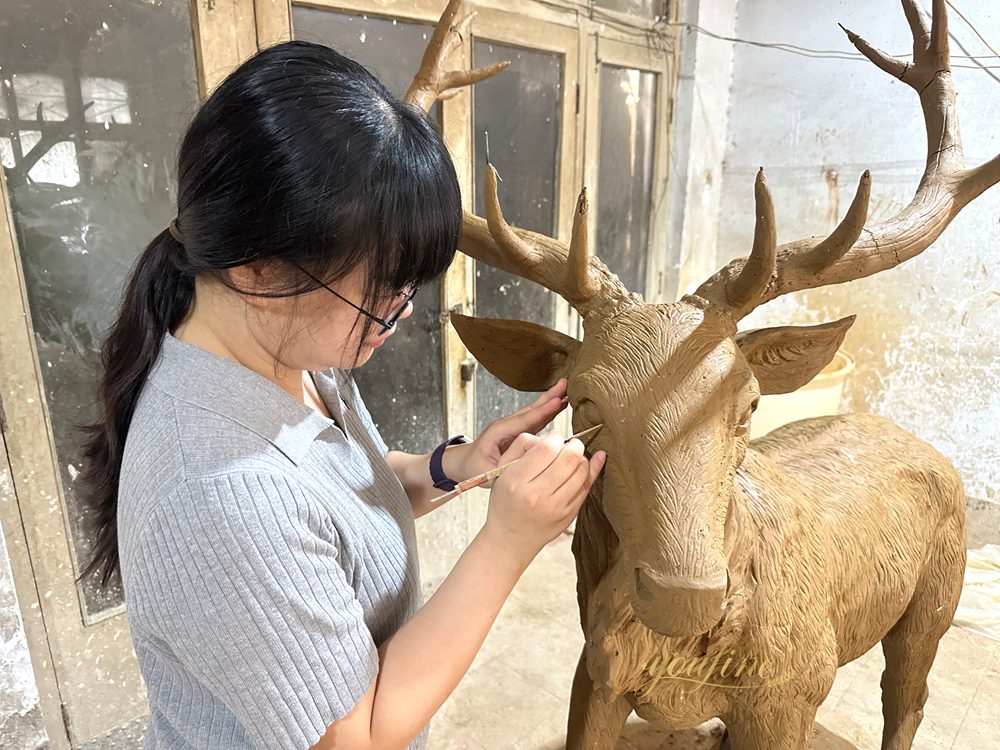
Can they provide photos/videos of the clay sculpting stage for you to confirm the shape?
Do they have their own casting factory, or do they outsource to a third-party workshop?
Is there a dedicated person responsible for quality control of the appearance during the welding and polishing stages?
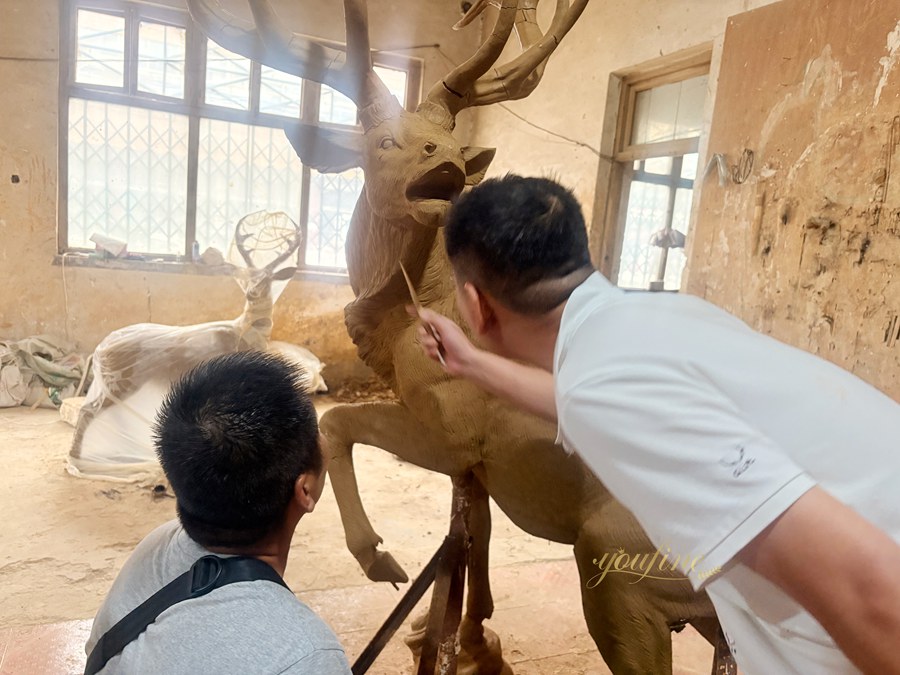
Two artists discussing how to modify a deer clay model
4.3 Surface Effects and Aging
A good bronze deer:
Has natural color transitions, not the fake effect of “spraying paint in patches”;
The aging layer is firmly attached and does not easily fade significantly after prolonged exposure to sunlight and rain.
Can offer different effect options: antique bronze, dark brown, black gold, green patina, etc.
You can ask the supplier to provide:
Close-up photos of past projects (to see the details)
Real-life photos of sculptures placed outdoors for more than one year – to see if it “looks better with age” rather than becoming “mottled.”
4.4 Details and Proportions
Details are where true skill is most evident:
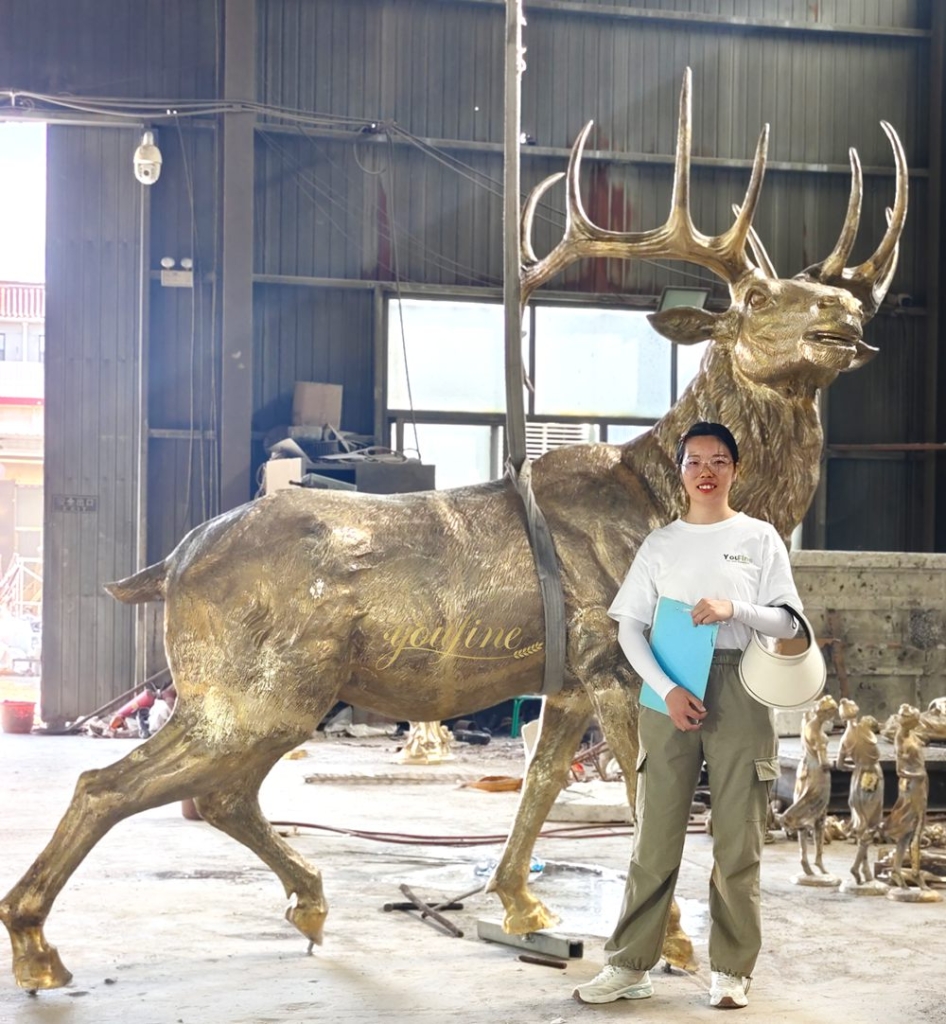
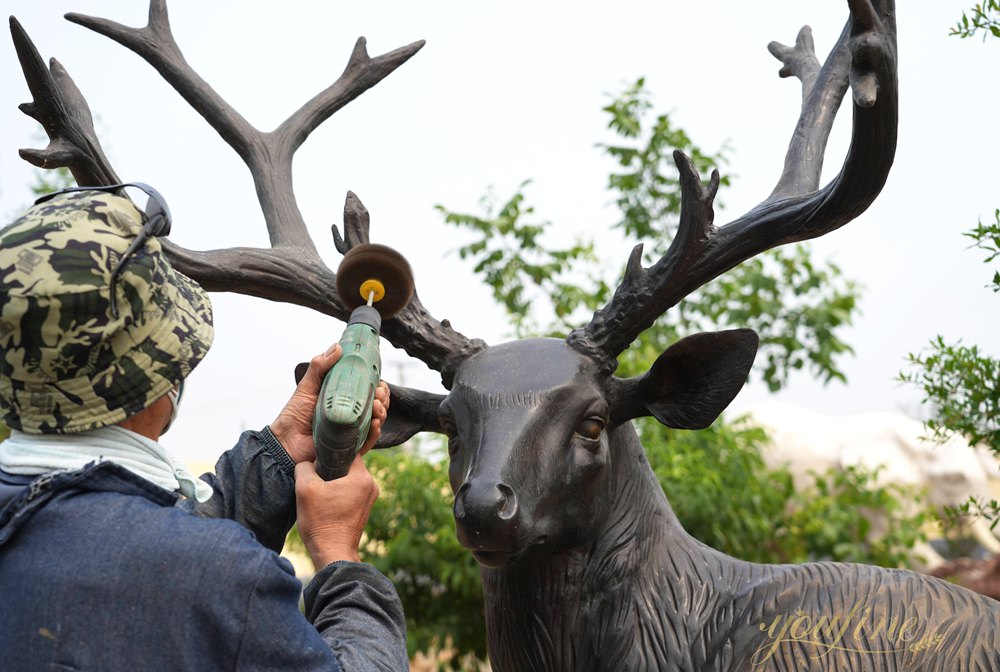
Are the antlers layered and textured, not a shapeless mass?
Are the muscle lines natural and fluid, with the realistic form of a living creature?
Are small details such as hooves, eyes, and ears carefully sculpted?
Is the overall proportion harmonious, without any incongruities such as “too big a head, too thin legs, or too short a neck”?
You can request unedited, real-life photos from different angles; if possible, videos are more realistic than photos.
4.5 Quality Control
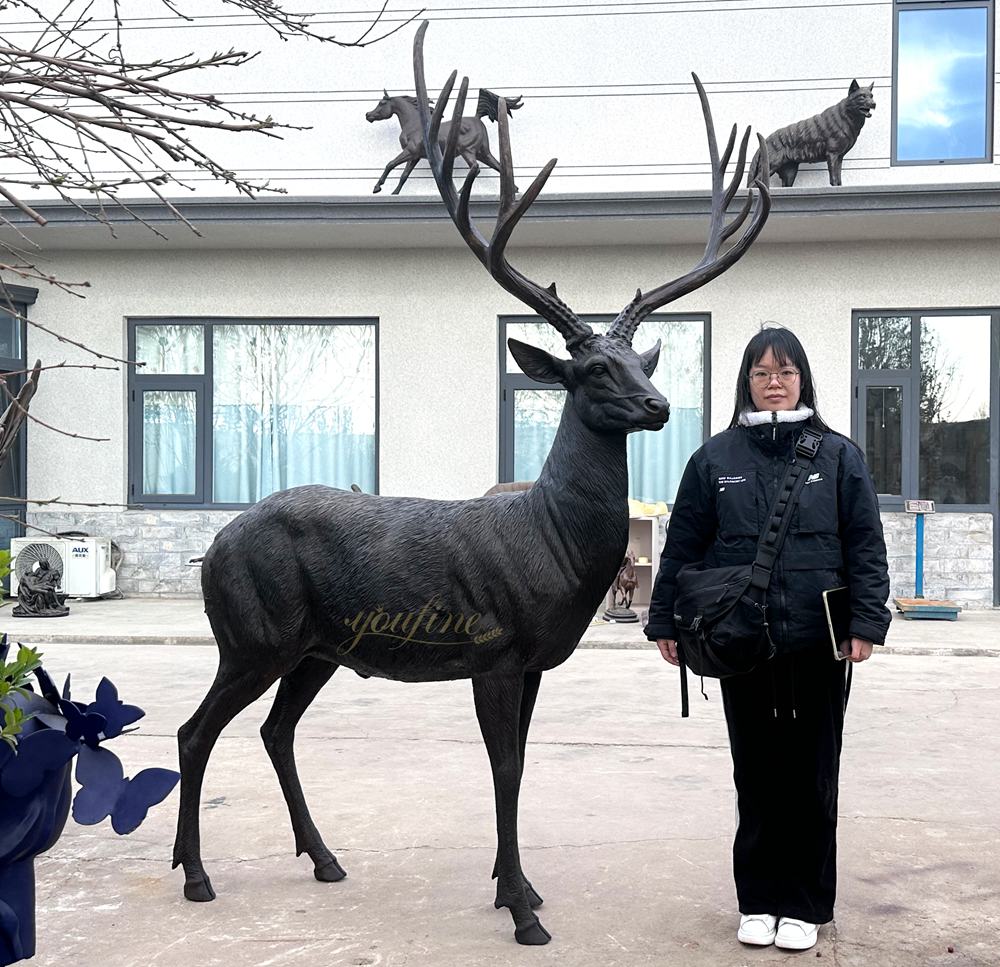
Reliable suppliers will have a clear quality inspection process, for example:
Overall, trial assembly before shipment to check stability and connection points.
Dimensional verification (height, length, base hole positions, etc.) to ensure consistency with the drawings;
Surface inspection (pinholes, cracks, significant color differences).
If the supplier doesn’t mention any quality control procedures and only says, “Don’t worry, we’ve been doing this for many years,” then it’s worth being cautious.
5. Core Dimension Three: Examining “Price and Quote Transparency” 💰
Price is certainly important, but even more important than the price itself is knowing exactly what you’re paying for.
| Dimension | Key Checkpoints | Keyword Hints |
| 1 Suspiciously Low Price | Why is it much cheaper than others? | Thin wall / Smaller actual size / Low-grade alloy / Rough patina |
| 2 Quotation Breakdown | Is the quote clearly itemized? | Statue body (size, material, process) / Base & fixing parts / Surface finish / Packaging / Shipping |
| 3 Extra Cost Items | Any hidden or excluded costs? | Insurance / Tax & duty / Customs / Installation not included |
| 4 Fair Comparison Basis | Are you comparing on the same specs? | Same height & length / Same bronze & wall thickness / Same solid vs hollow / Same surface effect |
| 5 Price Structure | Look at the structure, not just the final number | Higher one may be cheaper in the long run |
| 6 Long-term Cost | Consider 5–20 years, not only purchase price | Durability / Maintenance cost / Repair or replacement risk |
| 7 Value vs Price | Higher one maybe cheaper in the long run | Material + Labor + Process + Logistics, not “lump sum only.” |
5.1 Beware of “Unusually Cheap” Quotes
The cost of bronze sculptures mainly comes from: materials, labor, complexity of craftsmanship, size, and weight.
If someone quotes a price significantly lower than the average for the same size and similar requirements, they will likely “make up the difference” in the following ways:
Reducing wall thickness → Not noticeable in the short term, but prone to cracking and deformation in the long term;
Reducing actual size → Advertised as 2 meters, but the actual product may only be 1.7 meters;
Using inferior alloys or mixed materials → Prone to corrosion and difficult to control color;
Simplified surface treatment → Rough aging effect, not durable.
5.2 What a Reasonable Quote Should Include
You can ask the supplier to break down the quote clearly, including at least:
Price of the sculpture itself (specifying size, material, and craftsmanship)
Whether it includes the base/embedded parts/anchor bolts, and other installation accessories
Surface treatment method (which color, aging level)
Packaging method (wooden crate/steel frame/reinforcement measures)
Transportation method and cost (sea freight/air freight/land transport)
Whether it includes insurance, customs duties, and customs clearance fees (for international procurement)
The more transparent the quote, the lower the risk of “additional costs” later on.
5.3 How to Compare Multiple Quotes
Before comparing, standardize the criteria:
Size: Are the height, length, and volume consistent?
Material: Is it all genuine bronze? Is the wall thickness similar?
Craftsmanship: Is it solid/hollow? Is the surface effect consistent?
Price range: Look at the “composition of the total price,” not just the final number.
You can create a simple table to list the key parameters of several suppliers; many “tricks” will become obvious at a glance.
5.4 Consider “Long-Term Costs,” Not Just the “Purchase Price.”
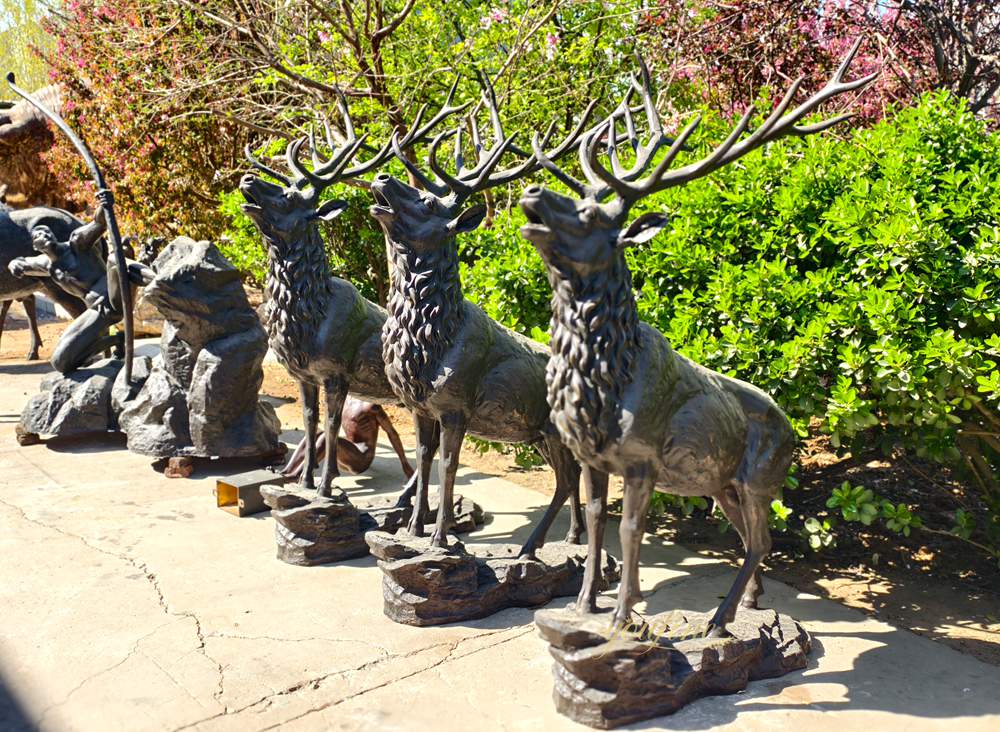
A bronze deer sculpture may need to stand outdoors for 10 or 20 years. Poor workmanship and low durability → Serious problems will start appearing after three to five years, requiring you to spend more money on repairs or replacements, and also damaging the project’s image.
Good workmanship and high durability → A one-time investment leads to long-term use, resulting in lower overall costs.
Therefore, given the same budget, it is more cost-effective to choose suppliers with more mature processes and a more established reputation.
6. Core Dimension Four: Focusing on “Delivery Time, Service, and Communication.”
A supplier’s reliability is largely reflected in their ability to “clearly explain things beforehand, provide feedback during the process, and not avoid responsibility when problems arise.”
| Dimension | Key Checkpoints | Keyword Hints |
| 1. Lead Time & Scheduling | Clear timeline and contractual delivery? | Milestone schedule / Casting–Patina–Packing–Shipping / Delivery date in contract / Delay liability |
| 2. Risk Signal | Vague time promises only? | “Soon / about / no problem” but no exact dates |
| 3. Communication Speed | Fast, accurate, and useful replies? | Timely response / Answers on point / Concrete suggestions, not only “no problem.” |
| 4. Language Ability | For overseas: good English & tech reading? | Clear English / Understand drawings & specs |
| 5. Progress Updates | Visual updates at key stages? | Photos/videos of clay model / Casting & welding / Patina finish / Multi-angle shots |
| 6. Early Correction | Can adjust based on your feedback? | Confirm pose, proportion, color before final packing |
| 7. After-sales Service | Clear policy for damage & color issues? | Transport damage handling / Repair plan & cost / Touch-up guidance |
| 8. Installation Support | Any help for installation on site? | Can you adjust based on your feedback? |
6.1 Delivery Time and Production Capacity
Focus on two key points:
Can they provide a detailed schedule, including clay model confirmation, casting completion, aging treatment completion, packaging and shipping, and transportation time?
Are they willing to specify the delivery time and liability for delays in the contract? Willingness to do so indicates confidence in their production capacity.
If the other party only says “approximately,” “should be,” or “very soon,” but avoids committing to specific dates, the risk is significant.
6.2 Communication and Responsiveness
You can gauge this during initial communication:
Are their replies timely, and do they address the questions directly?
Can they offer specific suggestions based on your needs, rather than just repeating “no problem”?
For overseas customers, also consider:
Do they have proficient English communication skills?
Can they clearly understand the drawings and technical requirements you provide?
6.3 Progress Reporting and Visualization
Reliable suppliers will proactively report at key milestones:
When the clay model is completed, they will send photos or videos for you to confirm the posture and proportions.
During the casting/welding stage, they will take photos of parts of the process.
After the surface aging treatment is completed, they will take multi-angle photos to confirm the color and texture.
This not only gives you peace of mind but also allows for timely adjustments of details during the process, preventing the discovery of significant discrepancies only upon delivery.
6.4 After-Sales Service
You can ask in advance:
If damage occurs during transportation, how will responsibility be allocated, and how will repairs and costs be handled?
If minor discoloration occurs during outdoor use, do they provide touch-up paint/color guidance?
Do they provide drawings, videos, or online guidance for installation?
Suppliers who seriously address after-sales issues usually have a long-term cooperation mindset.
7. Core Dimension Five: Examining “Case Studies and Reputation.”
A company’s track record is the best evidence of its reliability.
7.1 Real Project Case Studies
Focus on the following:
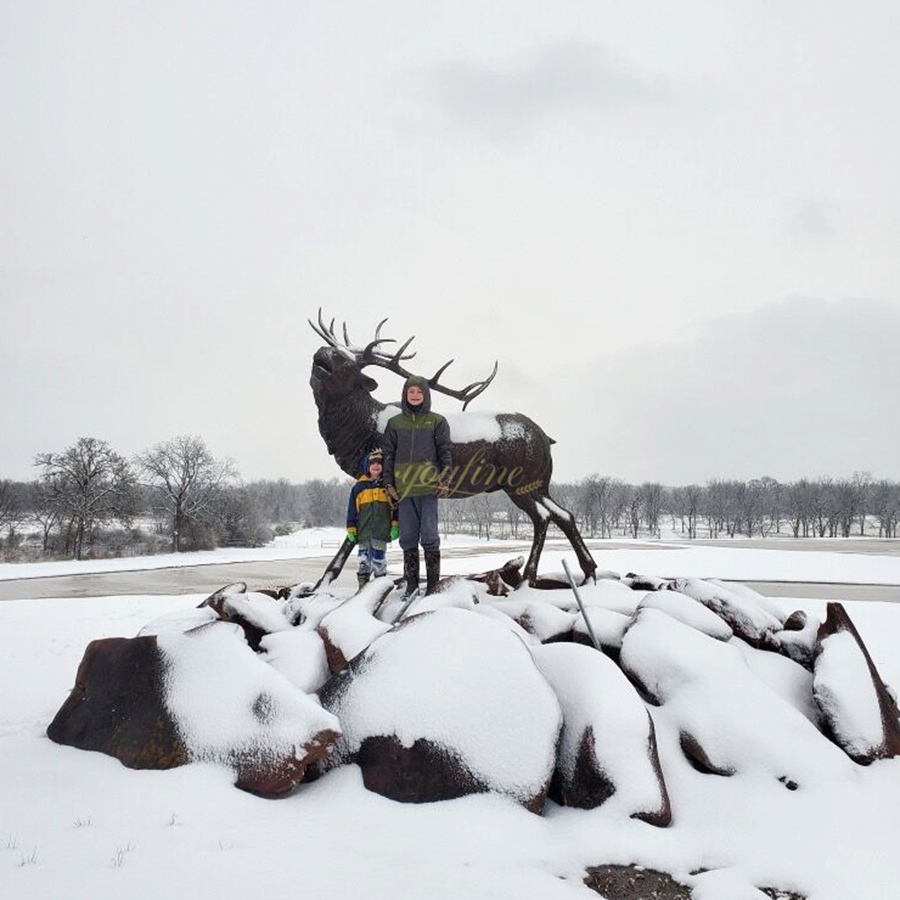
Are there real-world project photos of villas, estates, parks, community entrances, commercial plazas, etc.?
Can they describe the general project types and regions (within confidentiality limits)?
Do the photos reflect a consistent style from the same company, or are they haphazardly compiled from the internet?
If a supplier claims to have “made many bronze deer over the years” but cannot provide decent real-world photos, caution is advised.

7.2 Client Types
Ask about their main client base:
Do they have long-term collaborations with landscape design companies, real estate developers, hotel groups, or government projects?
Do they supply to overseas clients, and are they familiar with export procedures?
The more professional the clients, the higher the demands on the supplier; long-term collaboration itself is a form of endorsement.
7.3 Customer Feedback and Repeat Business
Consider the following:
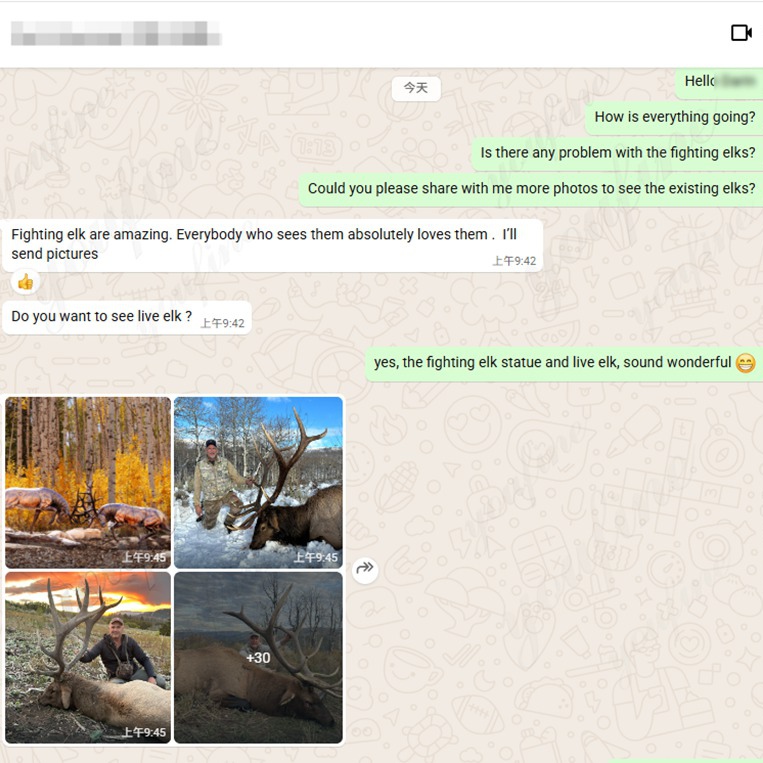
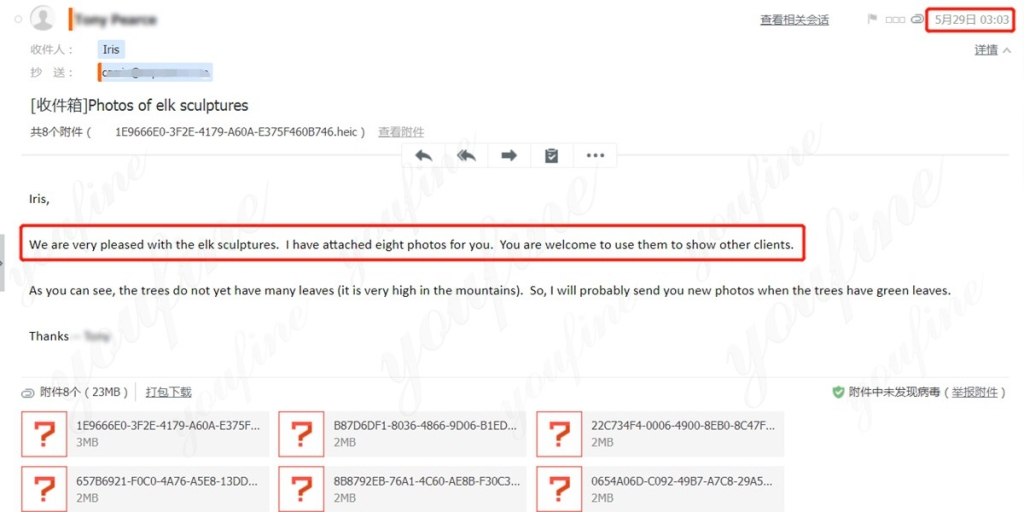
Are there screenshots of customer feedback, testimonials, or recommendations?
Are there cases of the same client placing multiple orders?
Are they willing (with mutual consent) to provide contact information for some clients for background checks?
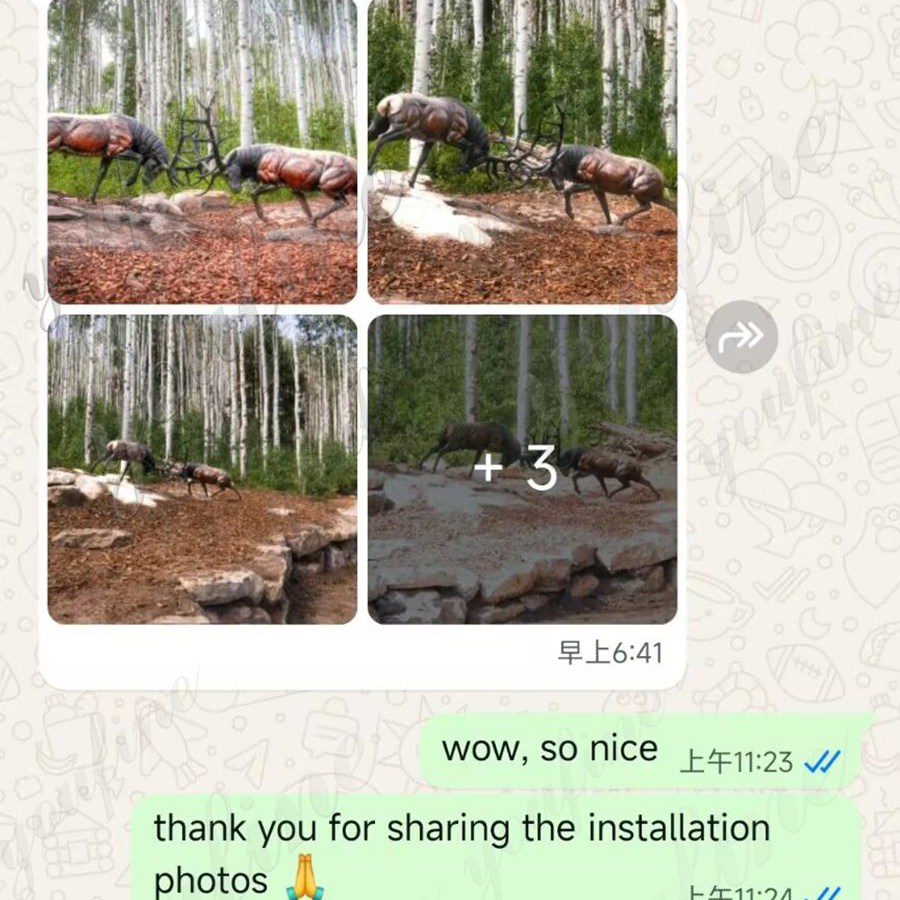
Repeat business and referrals usually indicate consistent performance in delivery time, quality, and service.
8. Local Suppliers vs. Chinese Factories: How to Choose
Many people buying bronze deer sculptures ask:
“I’m in Europe/North America/the Middle East/Australia. Is it better to buy locally or directly from a Chinese factory?”
A simple approach can help you decide.
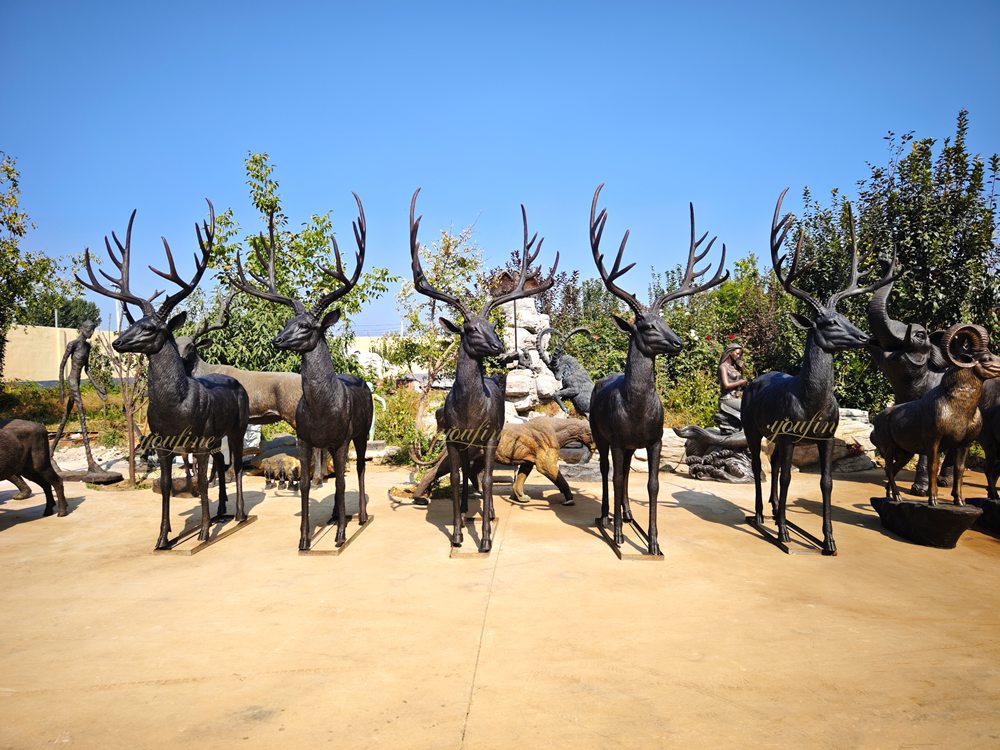
8.1 Situations Suitable for Choosing Local Suppliers
You only need 1-2 pieces of ready-made stock, with no complex customization requirements.
Time is very tight, and the sculptures must be delivered within a very short time.
You prioritize “seeing the actual product immediately and displaying it right away,” and have a relatively generous budget;
You don’t mind paying a higher final price for local showrooms, warehousing, and distribution services.
8.2 Situations Suitable for Choosing Chinese Factories
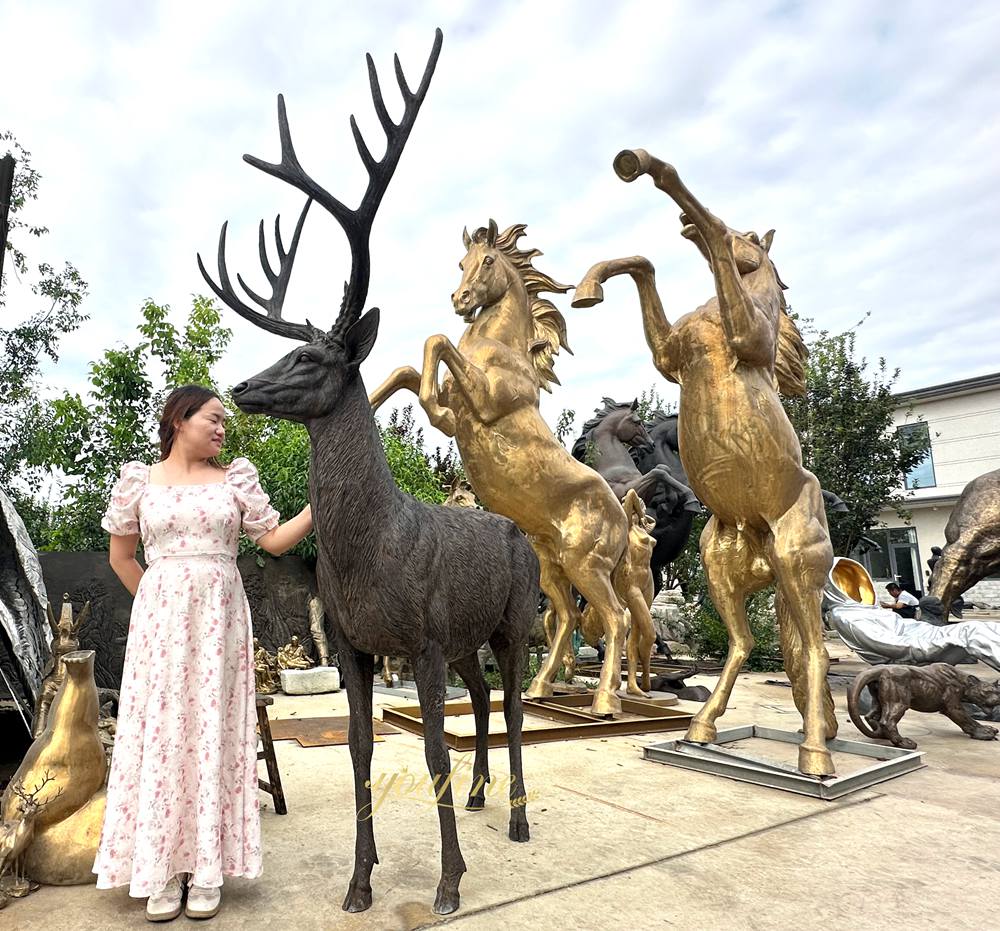
You need multiple deer or a whole group of deer, or even a custom-made piece for a specific project.
You have clear ideas about posture, size, color, and combination, and want true customization;
You have a certain project timeline and can allocate time for production and transportation;
You want to achieve larger sizes, greater detail, and better overall effect within a limited budget.
You want to establish a long-term cooperative relationship with a professional factory for future additions, expansions, and maintenance.
8.3 Core Comparison
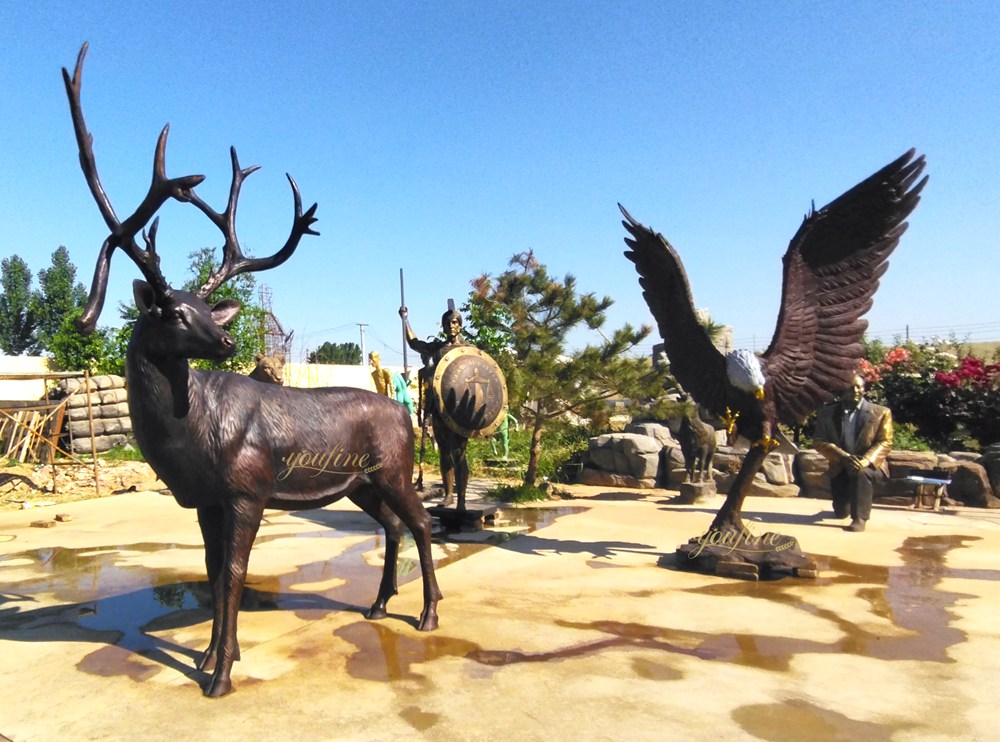
Cost: Direct supply from Chinese factories eliminates multiple layers of intermediaries, allowing you to get larger works or more pieces with the same budget.
Customization Capability: Chinese factories are familiar with art and design customization; local suppliers mainly focus on selling ready-made stock.
Delivery Time Control: For large custom projects, direct communication with the factory, without layers of subcontracting and information transfer, actually makes the process more controllable.
Communication and Logistics: Local communication is convenient, while international procurement requires reliable foreign trade and logistics support, but established factories are usually very proficient in this.
8.4 Simple Decision-Making Reference
If your needs are: small quantity, urgent need, and you just need to buy it on-site immediately → prioritize local suppliers.
If your needs are: project-level, customized, and you value budget and results → prioritize working directly with a professional Chinese bronze factory.
9. Practical Checklist: What to Ask When Contacting Suppliers? ✅
To help you communicate with suppliers more confidently, here’s a list of questions you can copy and use directly:
9.1 Cases and Experience
Do you have any bronze deer projects in similar settings (villas/residential entrances/commercial squares, etc.)? Can I see photos?
9.2 Materials and Structure
What type of bronze material is used?
What is the approximate wall thickness? Do large sizes have an internal steel structure?
9.3 Size and Appearance
What are the final height and length? Do you have size drawings or diagrams?
What surface colors and aging effects are available? Can you send some reference pictures?
9.4 Process and Workflow
What is the general production process?
During the clay modeling/mold-making stage, can you send me photos to confirm the design?
9.5 Price Breakdown
What is included in the quote?
Sculpture body
Surface treatment
Base/embedded parts
Packaging
Transportation (please specify origin and destination)
Are there any other potential costs?
9.6 Delivery Time and Transportation
What is the approximate production time?
What is the estimated transportation time?
How will you handle delayed delivery?
9.7 Installation and After-Sales Service
Do you provide installation diagrams or instructions?
How will you handle damage during transportation?
If touch-ups or maintenance are needed later, will you provide guidance?
9.8 Future Expansion
If we want to order more of the same model or expand the deer group in the future, can you retain the relevant data (size, color formula)?
By asking these questions, you can quickly assess the supplier’s professionalism, sincerity, and work habits.

10. A Good Supplier is Your Project’s “Invisible Partner.”
Choosing a bronze deer sculpture supplier may seem like a simple procurement, but in reality, you’re selecting an “invisible partner” for your project.
A good supplier will help you:
Consider proportions, structure, and safety during the design phase.
Proactively report progress during the manufacturing phase and work with you to refine the results to your satisfaction.
Provide ongoing maintenance advice and support for future purchases after delivery.
This way, you don’t have to worry about whether “this deer will fade, fall over, or be the wrong size,” but can simply focus on “where will it look best?”
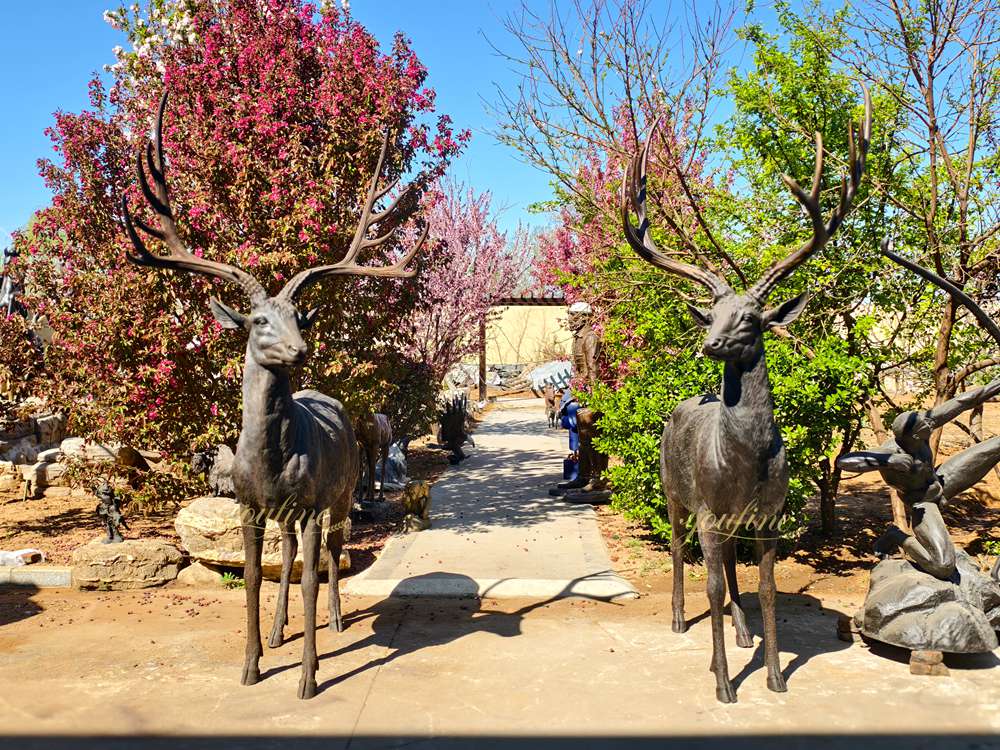
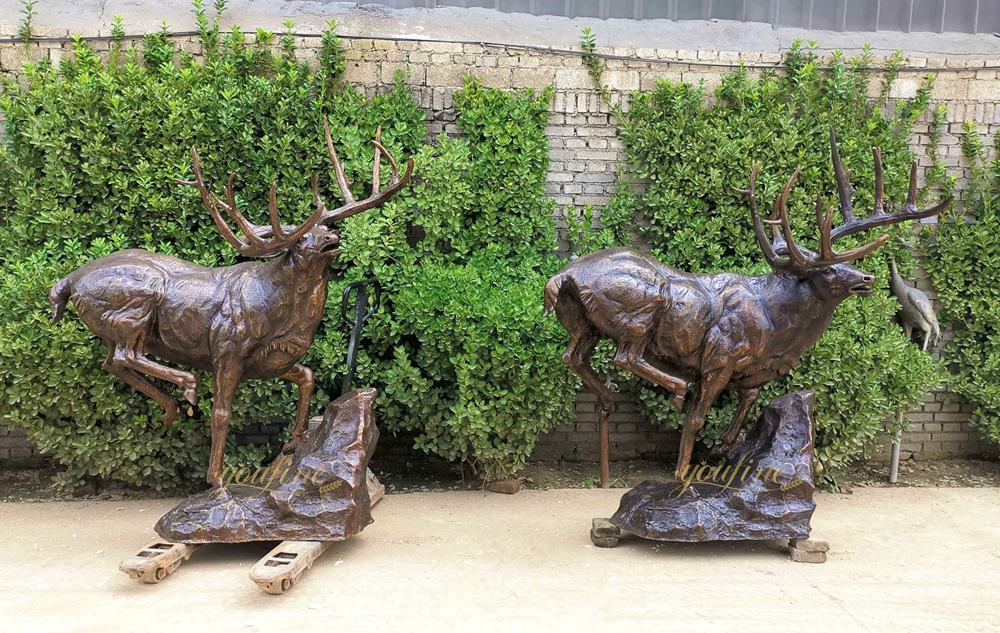
We hope this comprehensive guide will help you avoid pitfalls, complete more successful projects, and ensure that every bronze deer is worthy of the place and story it guards.
Panda, a 20-year veteran of bronze casting, is one of the co-founders and lead artisan of YouFine Art Bronze Foundry. Deeply rooted in the foundry, she has mastered every detail of the craft. Her expertise guarantees that each sculpture embodies the highest standards of quality and artistic integrity.