 You Fine Sculpture
A Complete Guide to How Bronze Sculptures Are Made by YouFine Bronzes Gallery
Bronze sculptures have stood the test of time for thousands of years. Bronze sculptures have symbolized strength, permanence, and artistic mastery for thousands of years. From ancient monuments to modern masterpieces, bronze statues stand as symbols of strength, beauty, and artistic expression. From monumental public statues to custom estate sculptures, bronze remains one of the most respected materials in fine art.
But how are bronze statues made?
And more importantly, how do we ensure museum-quality results for our global clients?
And what separates high-quality bronze sculpture manufacturing from ordinary casting?
At YouFine Bronzes Gallery, we use the traditional lost-wax casting process, refined through decades of practical experience. Below, we explain step-by-step how bronze sculptures are made — and why each stage directly impacts the final quality.
Let’s walk you step by step through how bronze sculptures are made using the traditional lost-wax casting method.
What Does “Lost-Wax” Mean?
The lost-wax method (also called investment casting)is the most respected technique for creating high-quality bronze sculptures. It has been used for thousands of years because it delivers:
✔ Exceptional detail
✔ Sculptural accuracy
✔ Long-lasting strength
✔ Surface richness and artistic expression
This method allows sculptors to honor the artist’s original intent with impeccable precision — whether it’s a life-size warrior statue or a delicate bronze animal sculpture.
Step 1: Concept Design & Custom Planning
Every bronze statue begins with an idea.
We work closely with:
- Villa and estate owners
- Developers and landscape architects
- Museums and cultural institutions
- Art consultants and galleries
- High-end hunting grounds, golf courses, and luxury projects
Our team develops the concept based on drawings, reference photos, or inspiration boards. We can provide:
- 3D design renderings
- Digital modeling
- Structural engineering analysis for large outdoor pieces
Whether you need a life-size bronze horse, a monumental lion, or a custom portrait sculpture, our design team transforms your vision into a buildable masterpiece.
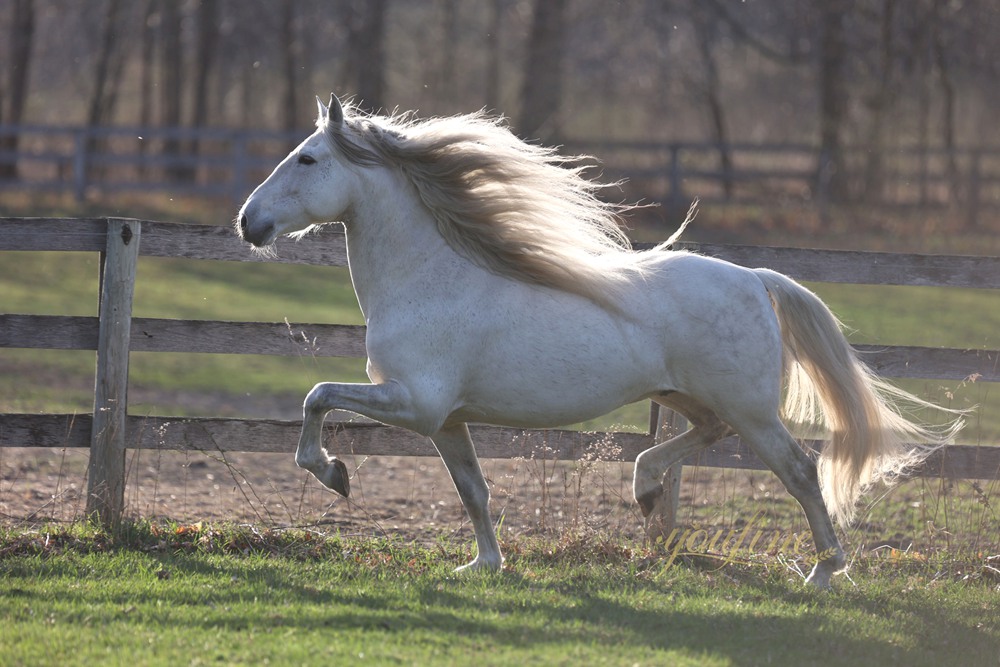
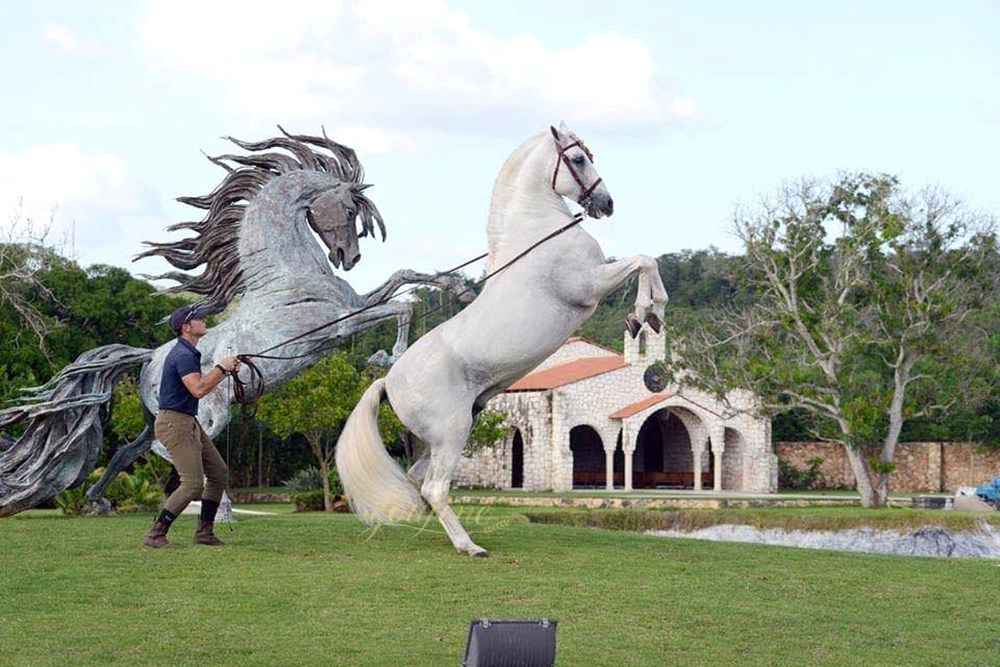
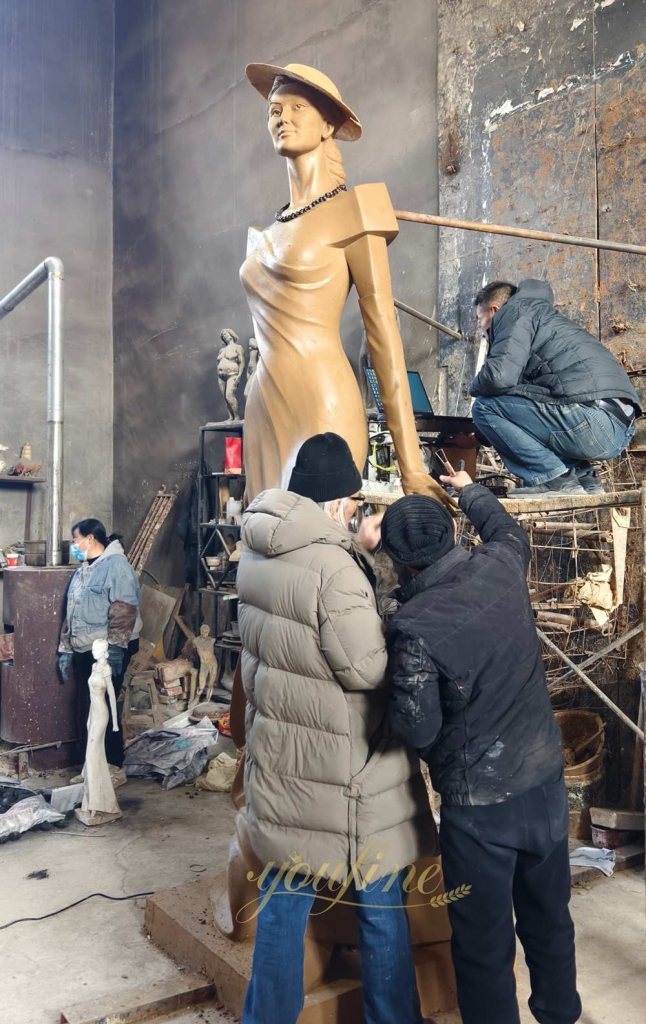
Step 2: Clay Model Creation — The Soul of Realistic Bronze Sculpture
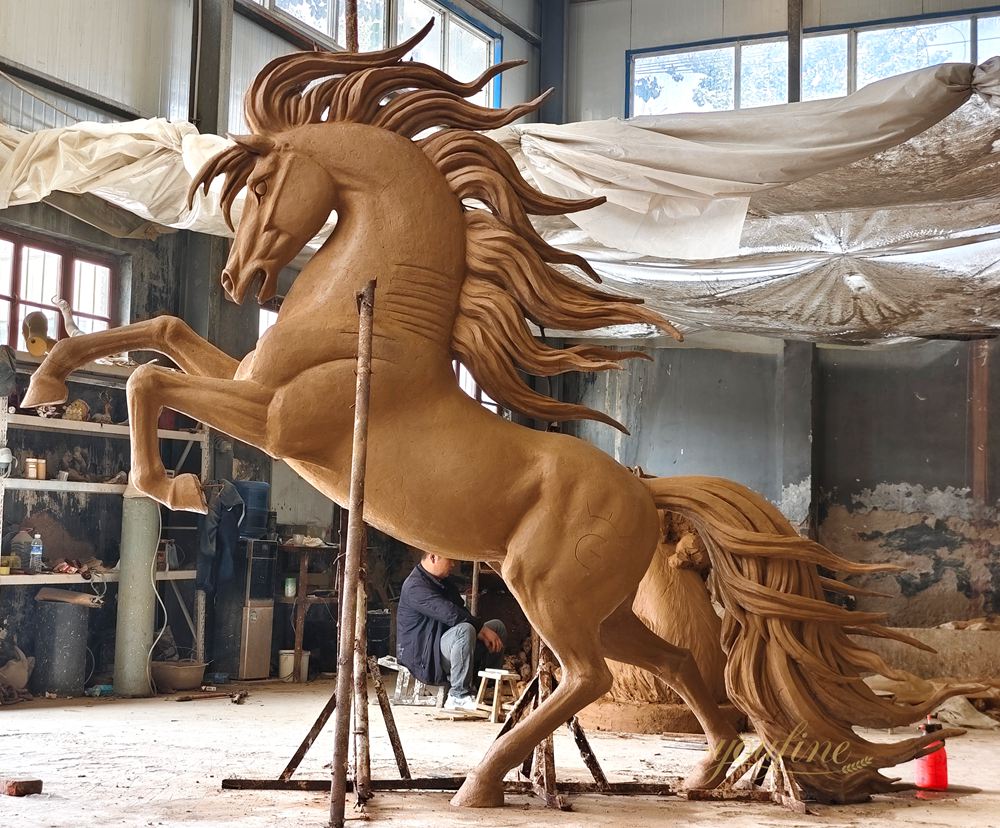
If there is one stage that determines whether a bronze statue will look truly lifelike, it is the clay model.
The realism of the final bronze sculpture depends entirely on how detailed and accurate the clay model is.
Our artists specialize by category:
- Animal sculptures
- Human figures
- Portrait sculptures
- Religious and classical figures
This specialization ensures deep anatomical understanding and artistic accuracy.
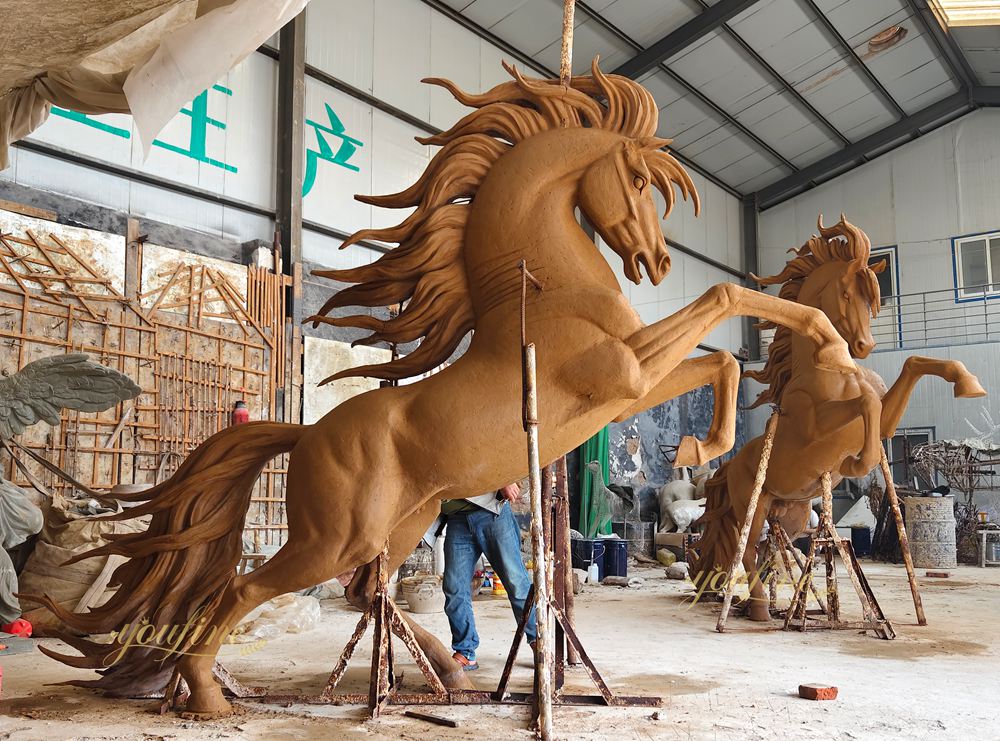
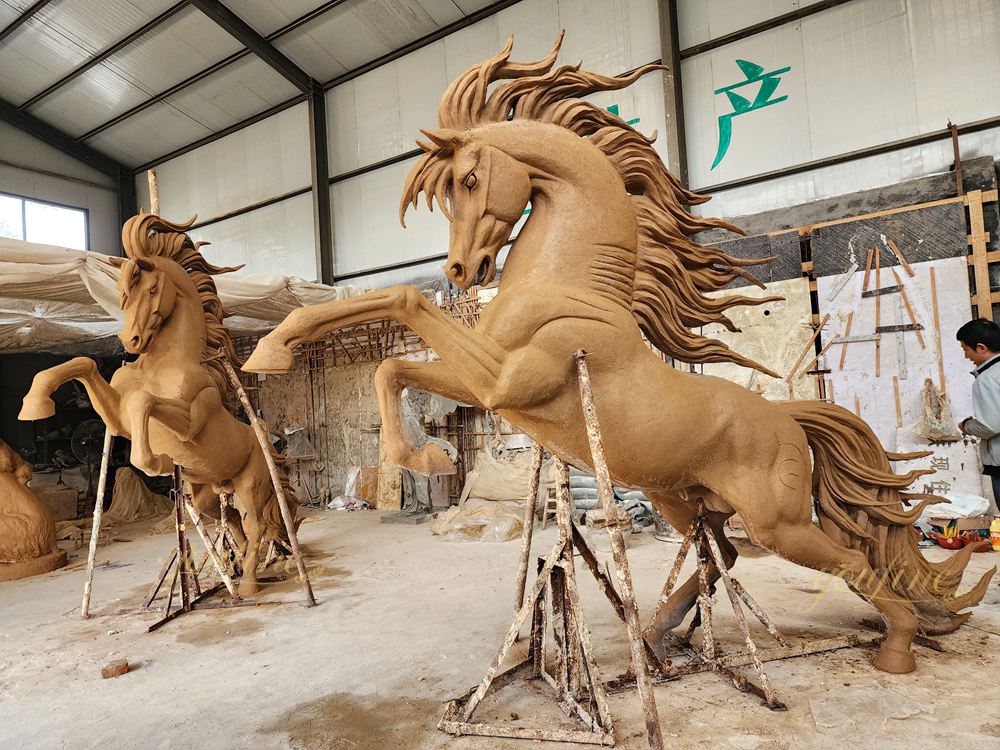
When sculpting animals, we carefully shape:
- Individual muscle tension
- Skin folds
- Bone structure
- Facial expressions
- Fur flow direction
Especially for wildlife sculptures, hair and fur texture are sculpted layer by layer by hand. The subtle layering of fur, the depth between strands, and the direction of movement create natural shadows and realism.
For human figures, we refine:
- Facial wrinkles
- Eyelid structure
- Lip contour
- Vein detail
- Fabric texture
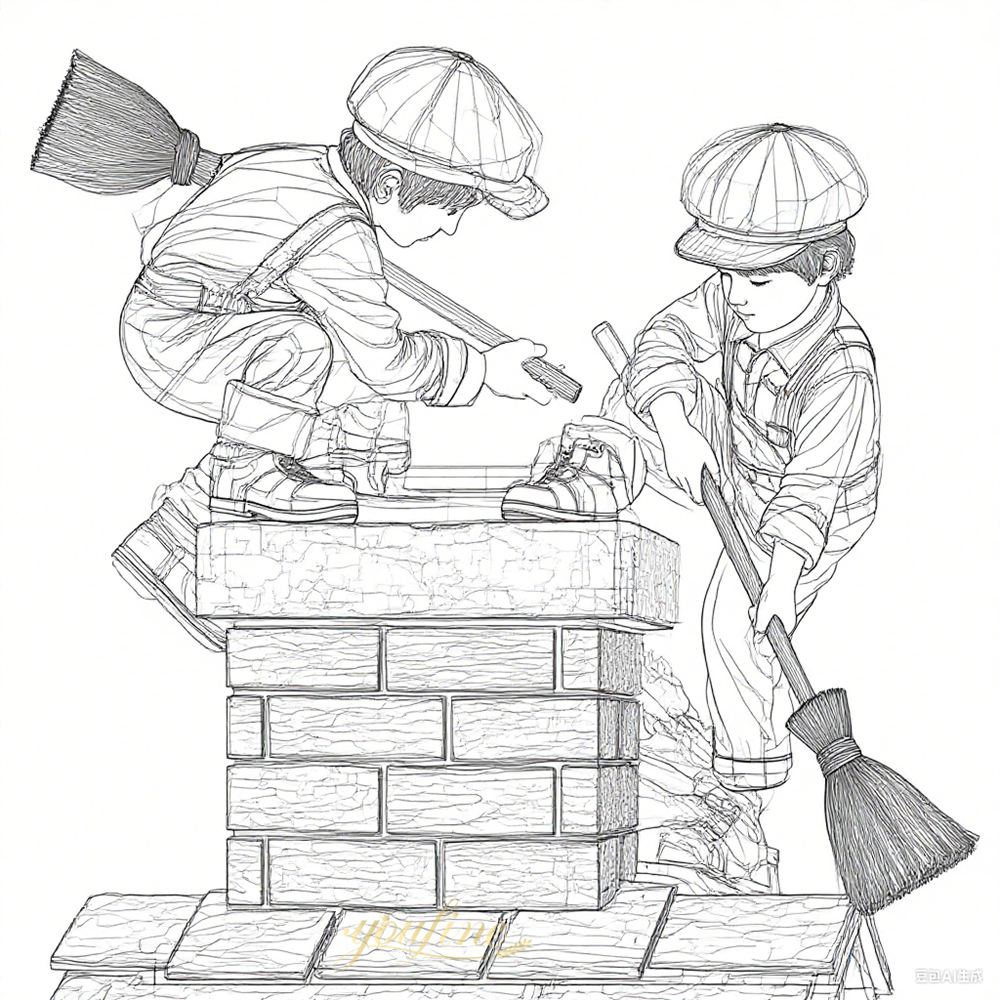
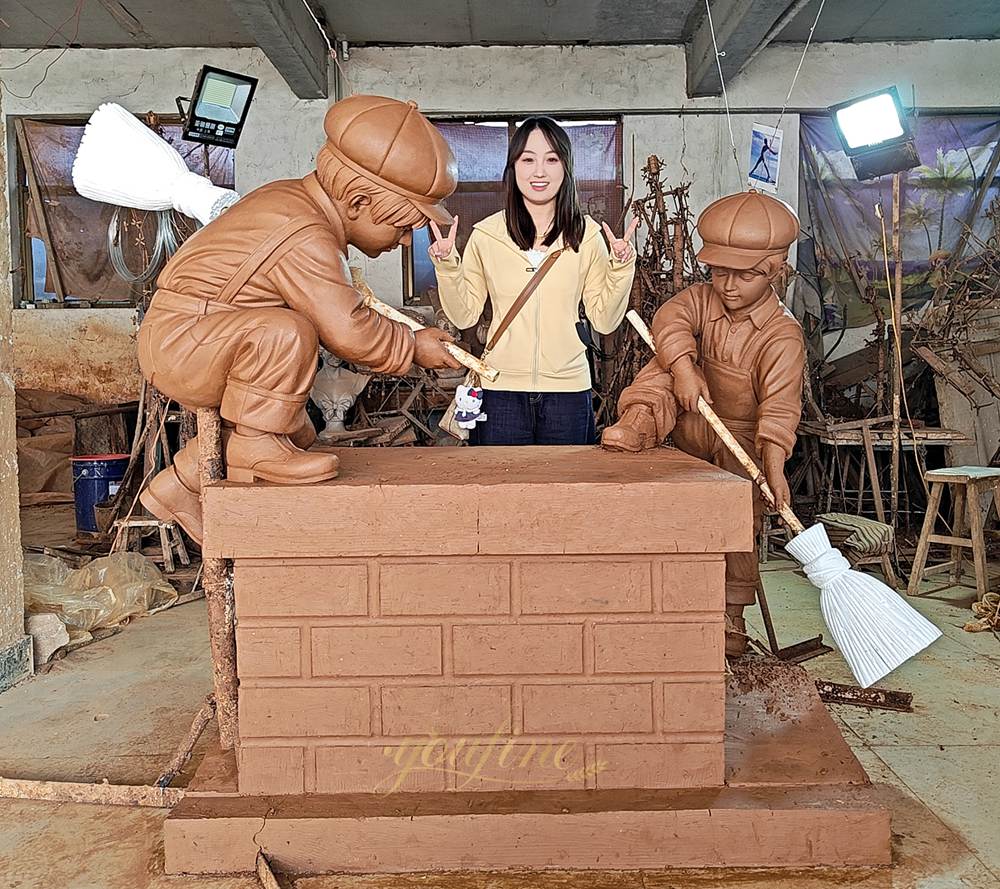
The clay model is not a rough sketch — it is a full-scale, highly detailed sculpture.
A bronze sculpture can only be as realistic as the clay model behind it.
We also maintain many ready-made clay models, which can help clients save time and development costs when appropriate.
Step 3: Silicone Mold Making — Capturing Every Detail
Once the clay model is finalized and approved, we create a high-quality silicone mold.
Silicone molding is essential because it captures microscopic details from the clay surface, including:
- Fine fur textures
- Facial wrinkles
- Feather edges
- Skin pores
- Fabric grain
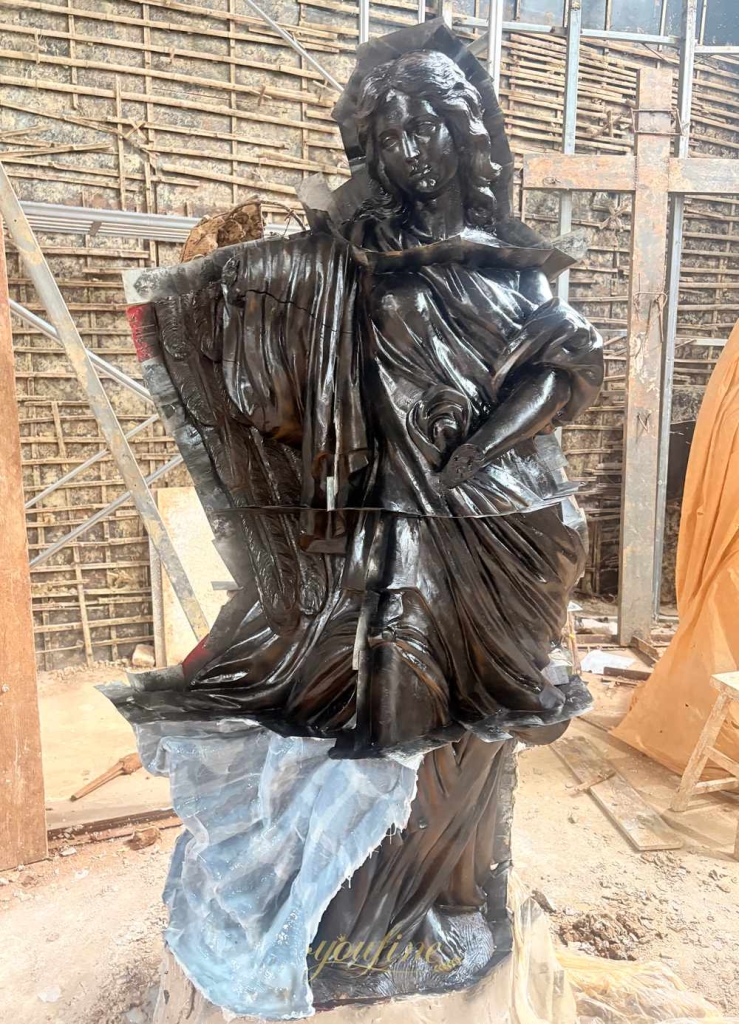
Inferior molding materials cannot reproduce such subtle depth. Silicone ensures that every line sculpted in clay transfers faithfully into the casting stage.
The more precise the mold, the more realistic the final bronze result. the sculpture. This wax model is carefully refined by hand to prepare for casting.
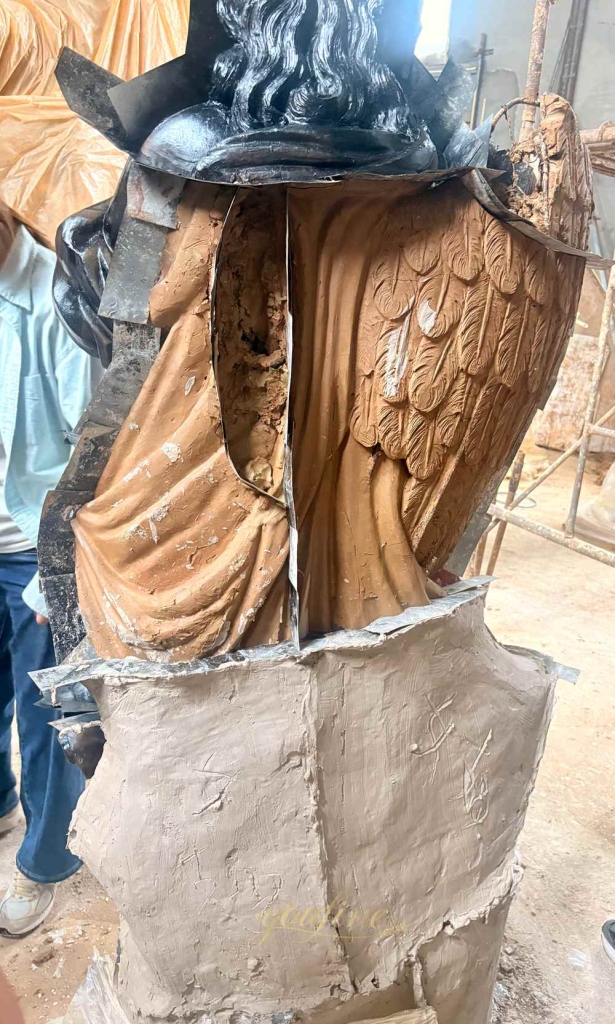
Step 4: Wax Replica Creation
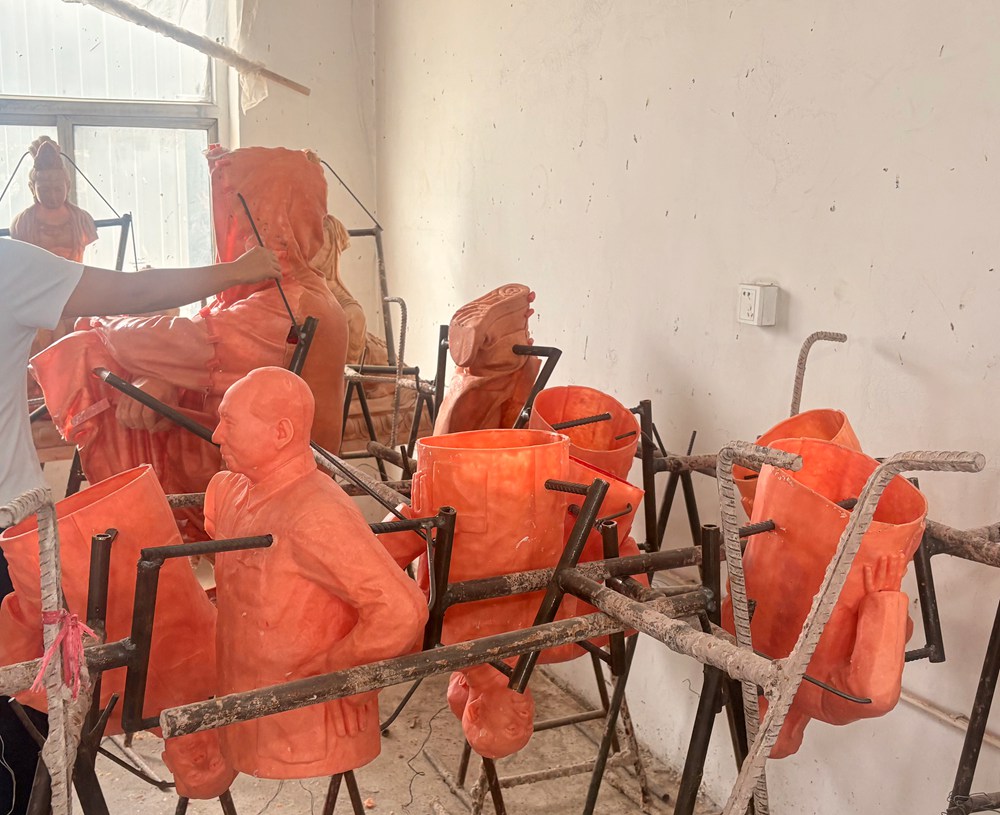
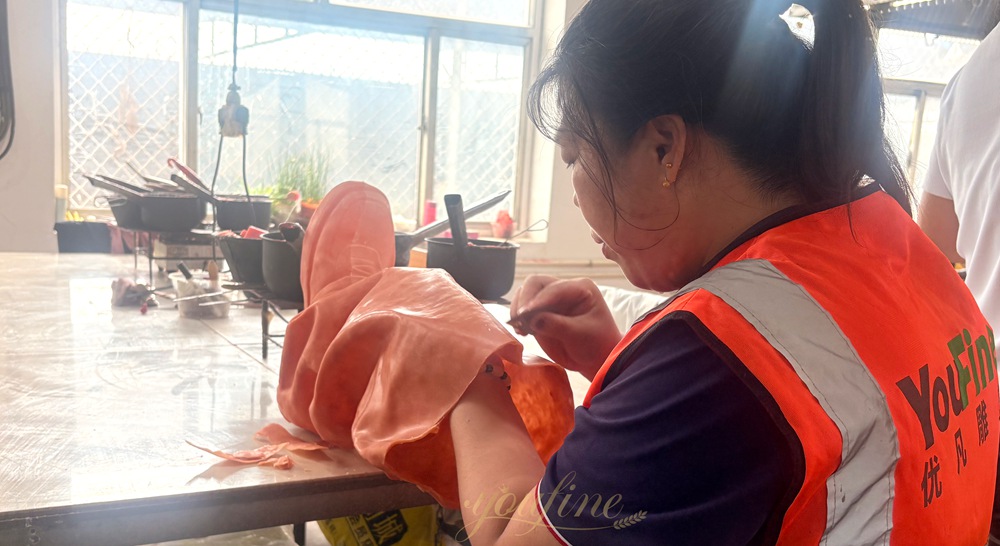
Molten wax is poured into the silicone mold to create a hollow wax replica of the sculpture.
This wax model preserves:
- Surface texture
- Structural thickness control
- Fine detailing
- Accurate proportions
Our artisans further refine the wax model by hand before casting.
This stage ensures that detail is not lost before entering metal form.
Step 5: Building the Sand Shell with Silica Sol
After the wax model is completed, we begin building the sand shell around it. The wax sculpture is coated layer by layer with fine sand, silica sol, and bonding material to form a strong outer mold. This process is repeated multiple times to build sufficient thickness and strength.
The sand shell must be:
Strong enough to withstand molten bronze temperature (over 1,100°C / 2,000°F)
Evenly layered to prevent cracking
Properly dried before casting
This shell plays a critical role in maintaining structural integrity during the pouring process.
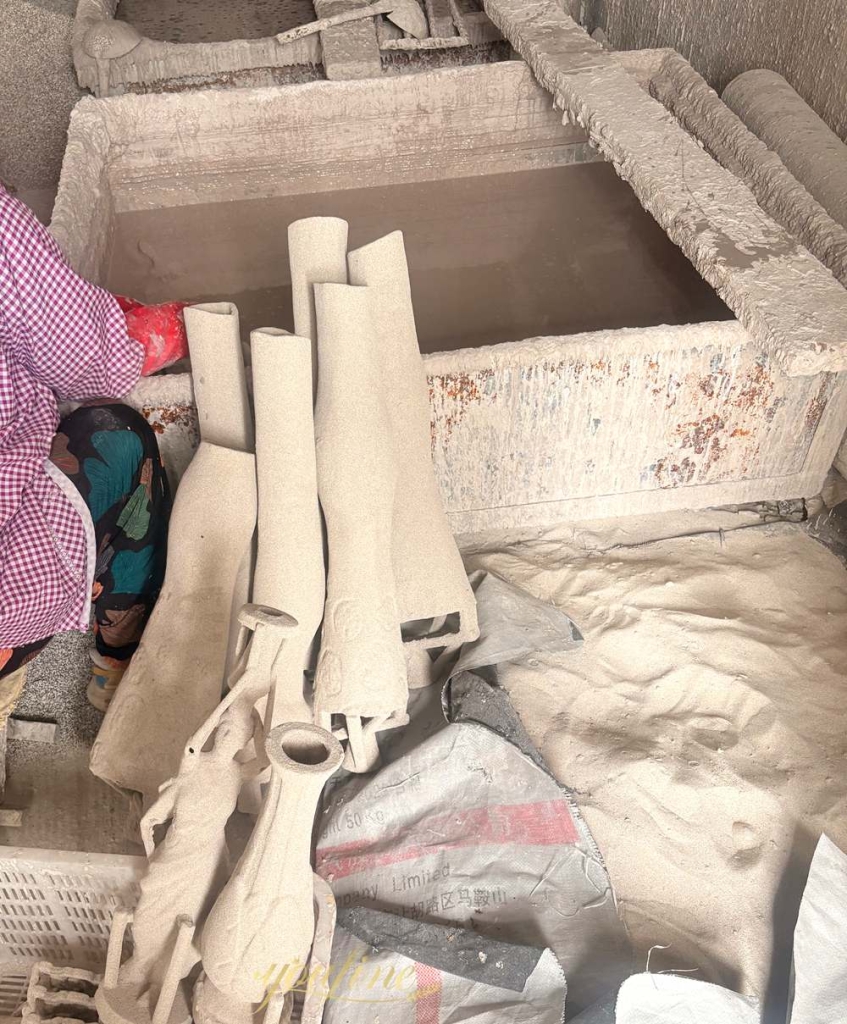
If the shell is weak or uneven, casting defects such as cracks or air holes may occur. A properly constructed sand shell ensures safe bronze flow and accurate detail reproduction.
Silica sol plays a critical role:
It prevents white surface spots on finished bronze sculptures.
Some lower-quality factories use ammonia instead, which often causes white blemishes on the bronze surface.
By using silica sol, we ensure cleaner, more stable bronze casting results.
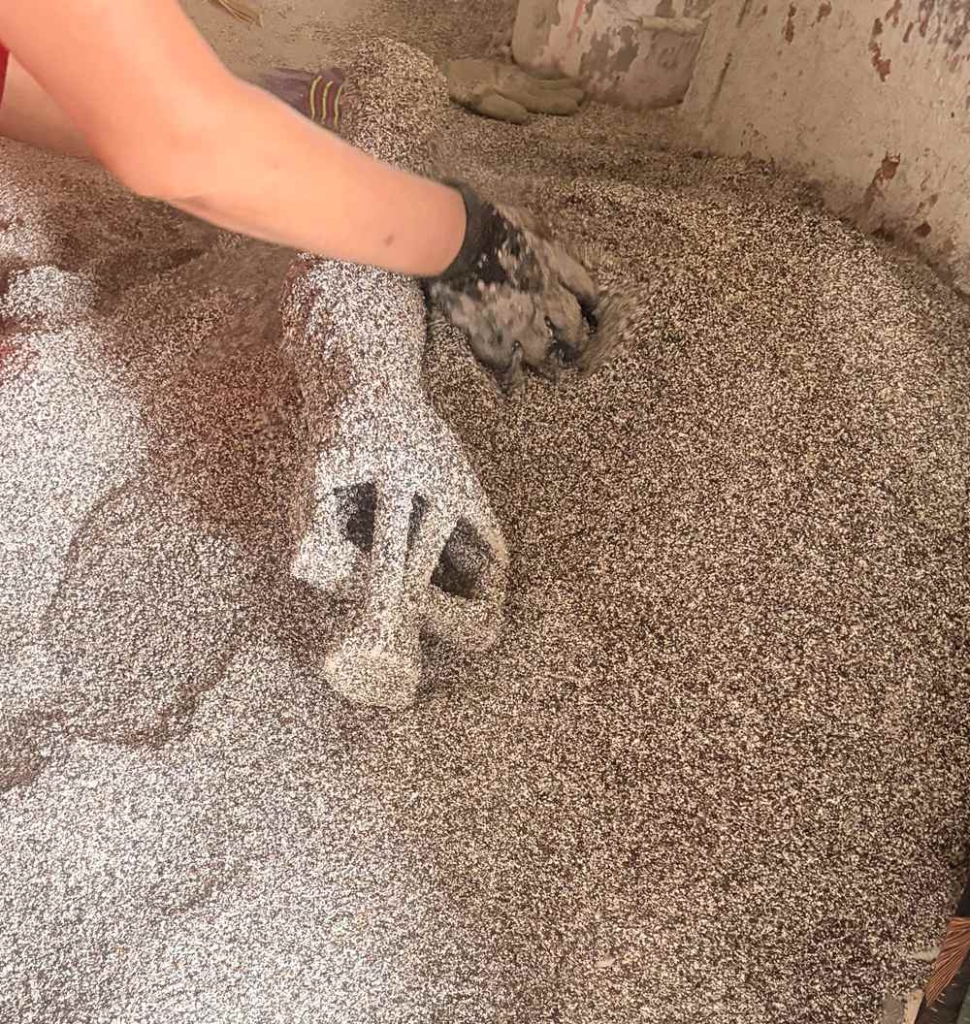
Step 6: Lost-Wax Casting (Bronze Pouring)
The wax model is encased and heated, allowing the wax to melt away — leaving a hollow cavity.
Molten bronze, heated to approximately 1,100°C (2,000°F), is then poured into the mold.
We enhance bronze quality by:
- Adding zinc to improve hardness and strength
- Using constant-temperature electric furnaces
- Maintaining precise temperature control
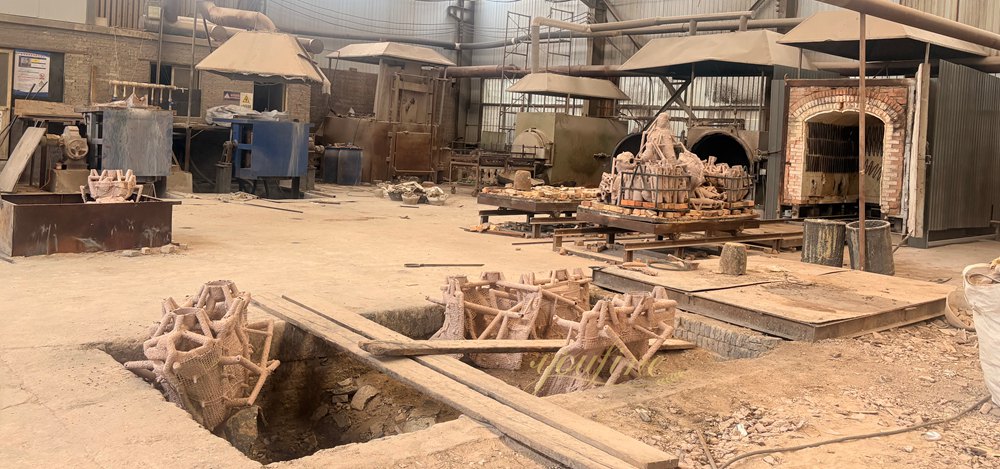
Unstable furnace temperatures can lead to surface imperfections and pitting. Controlled casting ensures a smoother, more refined bronze finish.
This is where clay artistry becomes permanent metal.
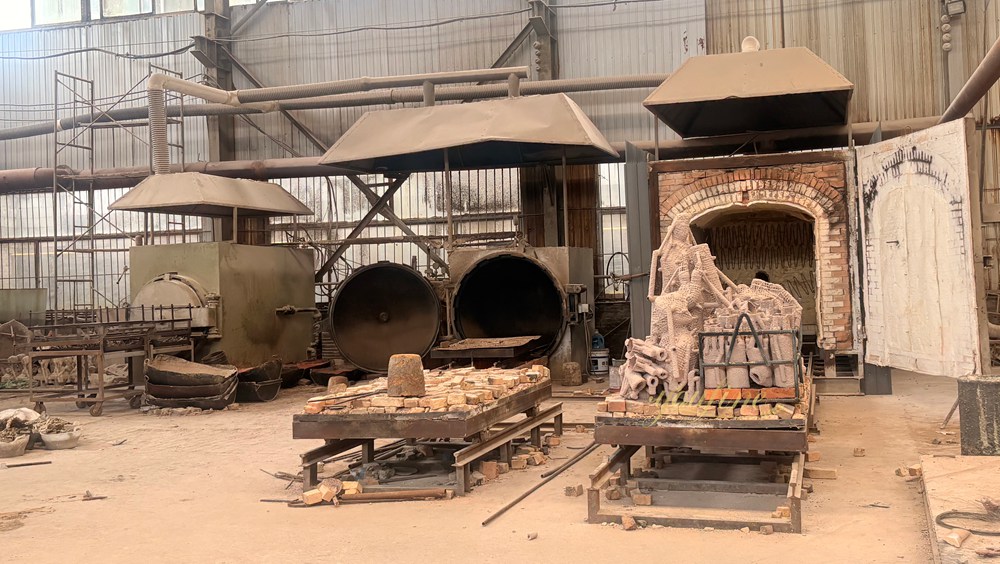
Step 7: Removing the Outer Shell
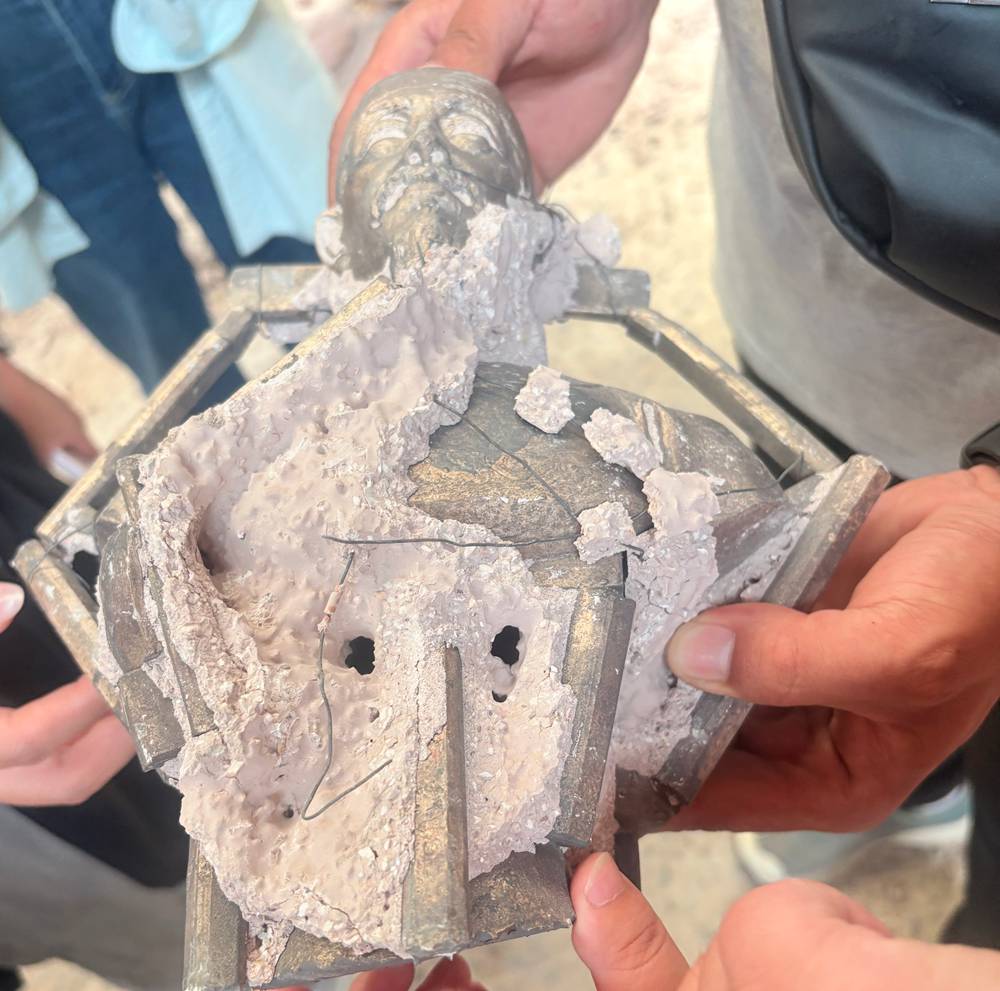
After cooling and solidification, the outer shell is removed.
At this stage, the raw bronze casting is revealed.
The quality of earlier steps becomes visible here — smooth surfaces, clear detail, and proper thickness indicate precision craftsmanship.
Step 8: Welding, Chasing & Surface Refinement
Large statues are often cast in sections.
Our experienced craftsmen:
- Weld sections seamlessly
- Grind and polish joints invisibly
- Re-carve surface textures where needed
- Inspect proportions and structural stability
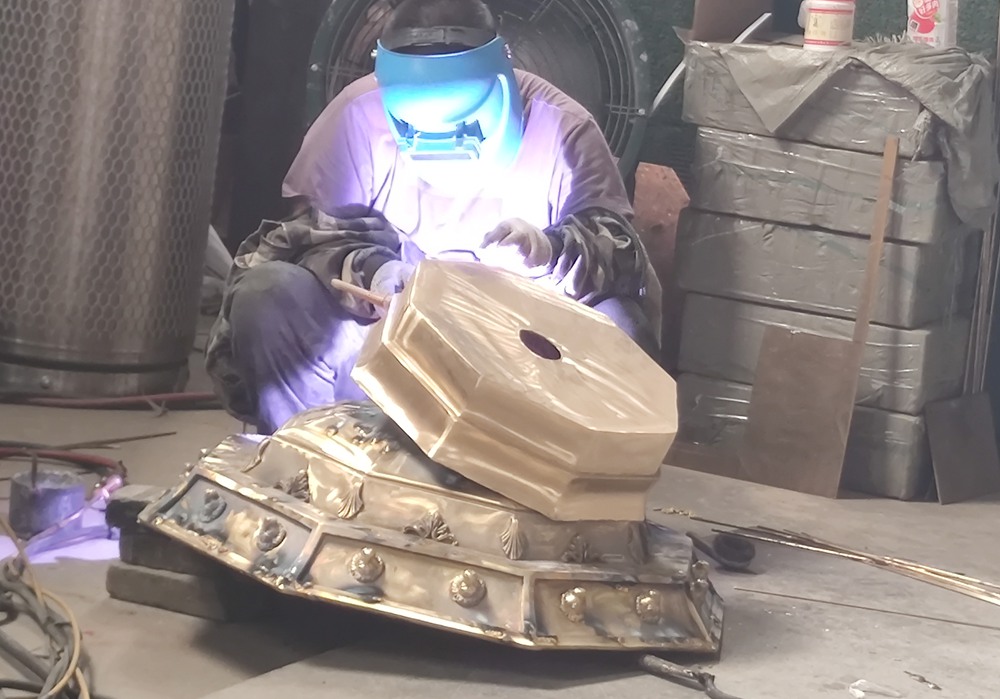
Every weld is carefully refined so the sculpture appears as a single continuous piece.
Quality control is strict at every stage, including:
- Material inspection of bronze ingots
- Proportion verification
- Surface and structural safety checks
Step 9: Patina & Surface Coloring
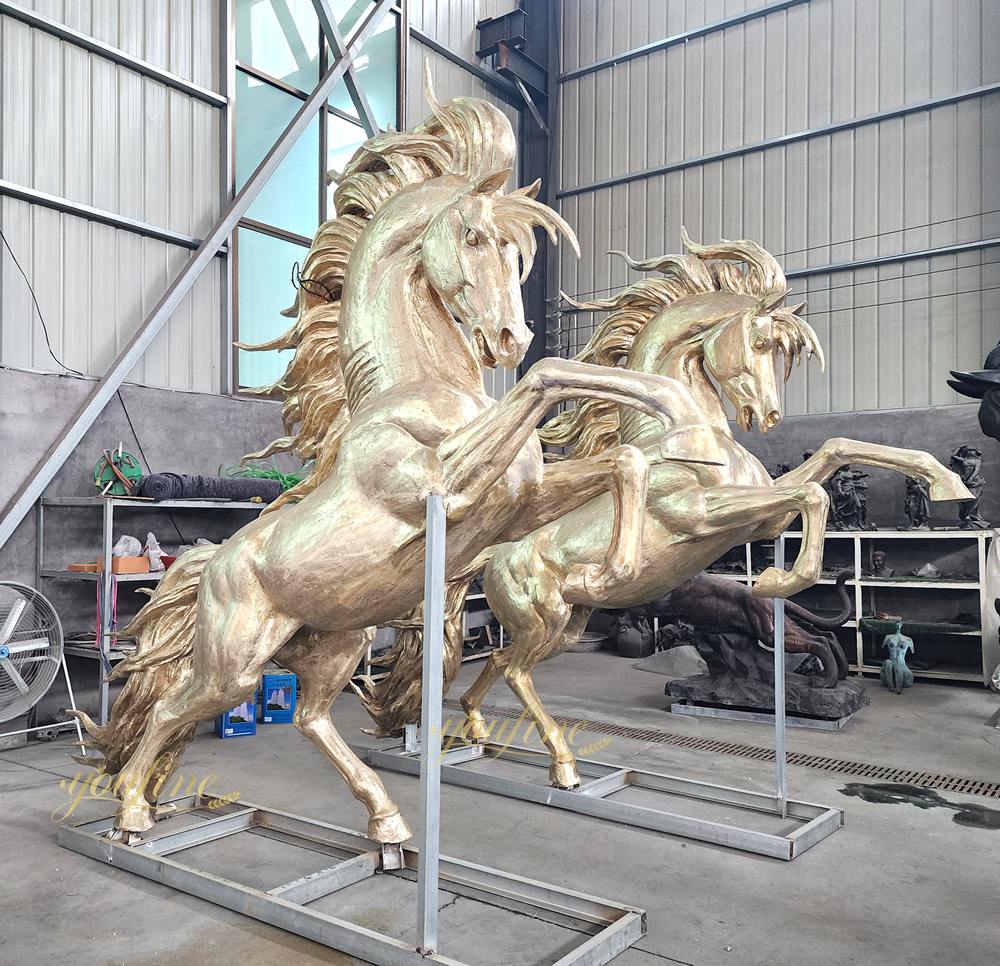
Raw bronze has a golden metallic color.
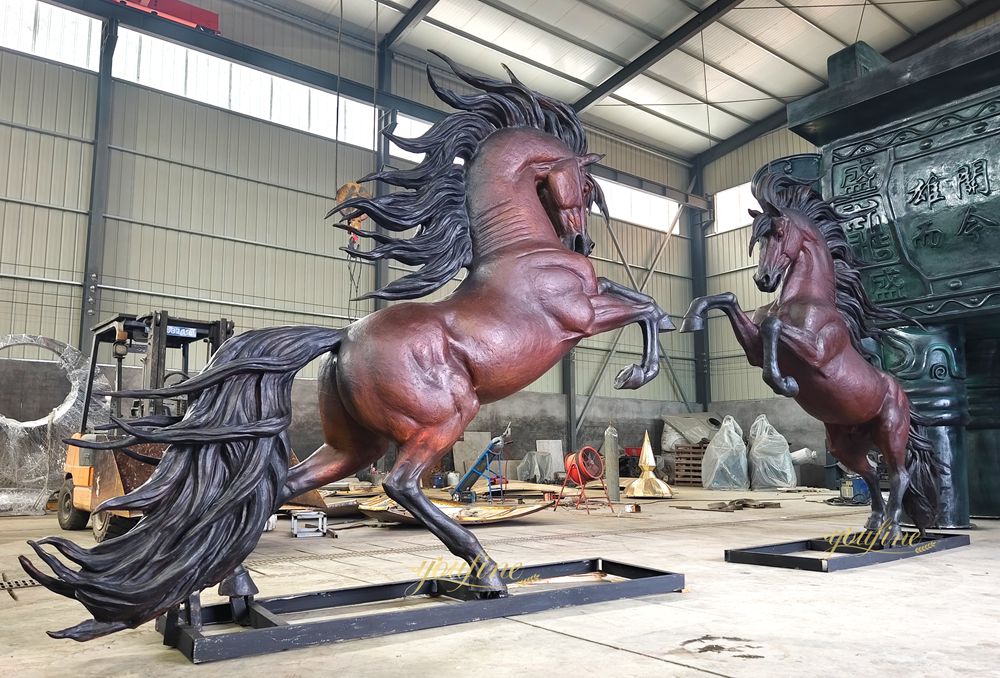
But most finished sculptures have rich brown, black, green, or custom tones.
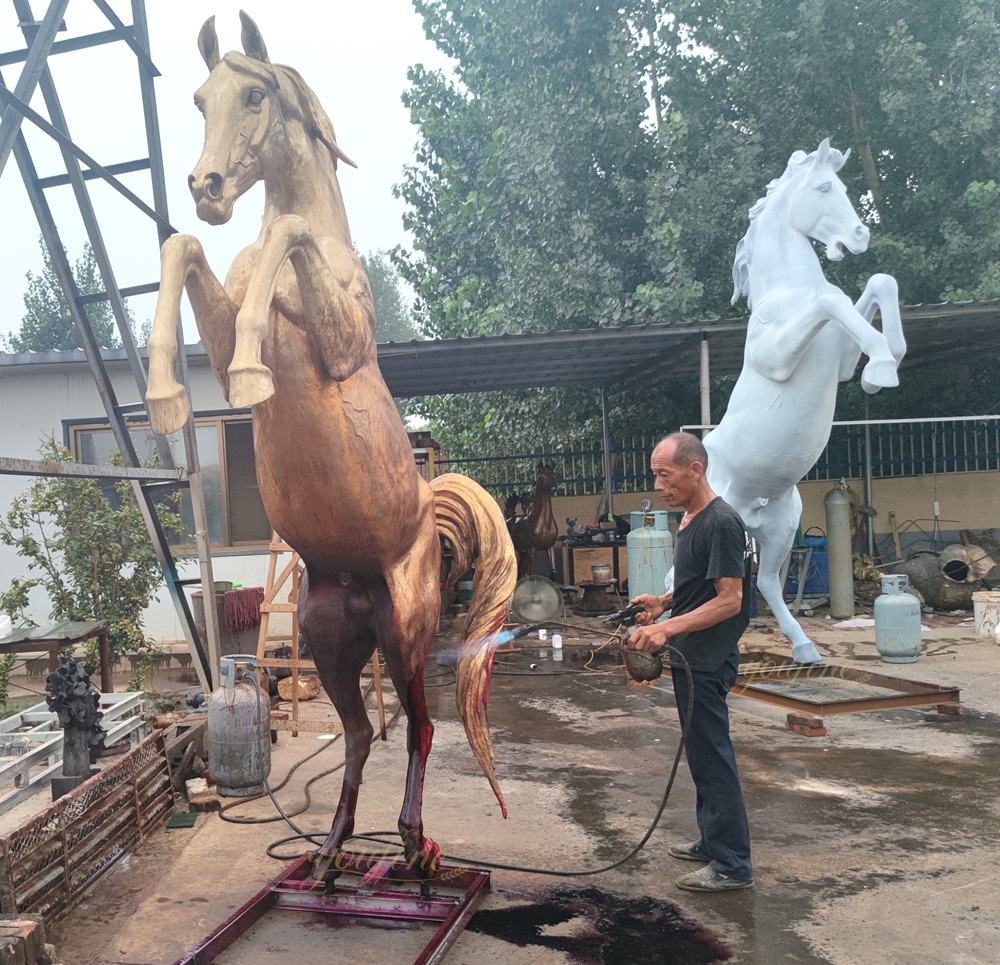
We use professional chemical patina techniques:
- Controlled heating of the surface
- Layered application of chemical solutions
- Artistic brushing and tone adjustments
- Outdoor corrosion protection coatings
This process creates depth, character, and long-term durability — especially important for outdoor installations in villas, plazas, or estates.
Step 10: Protective Coating — Wax or Clear Varnish
After patina, we apply a protective layer to isolate the bronze from moisture and oxygen.
Without protection, bronze oxidizes faster when exposed to air and humidity.
There are two primary protection methods:
Wax Coating
- Traditional museum-standard finish
- Natural surface appearance
- Allows breathable protection
- Requires periodic maintenance
Clear Varnish (Lacquer)
- Creates a sealed protective barrier
- Lower long-term maintenance
- Stronger resistance in humid climates
- Suitable for public outdoor sculptures
Both methods slow oxidation and extend the sculpture’s lifespan significantly.
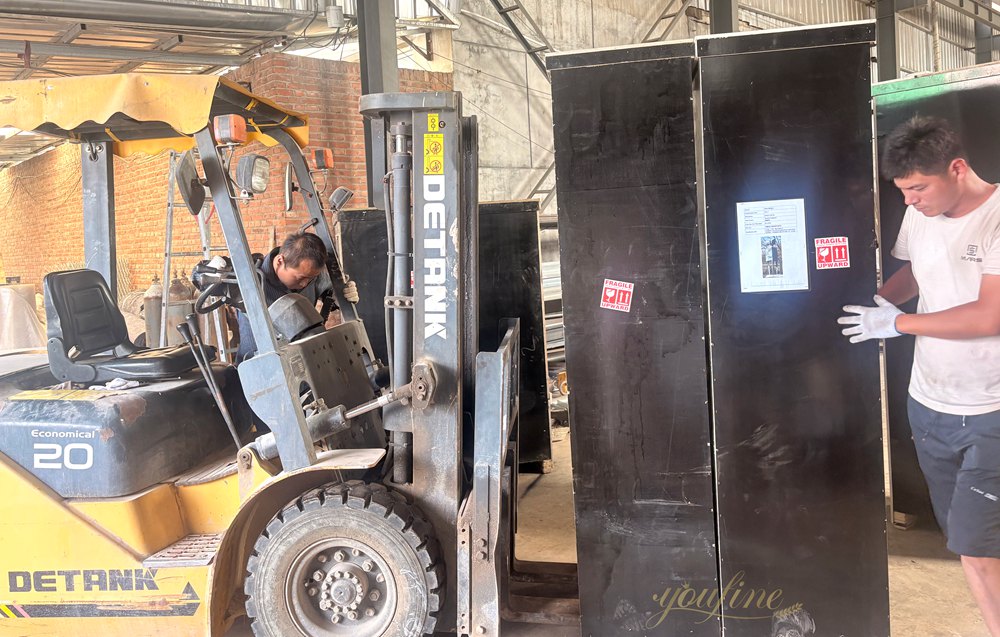
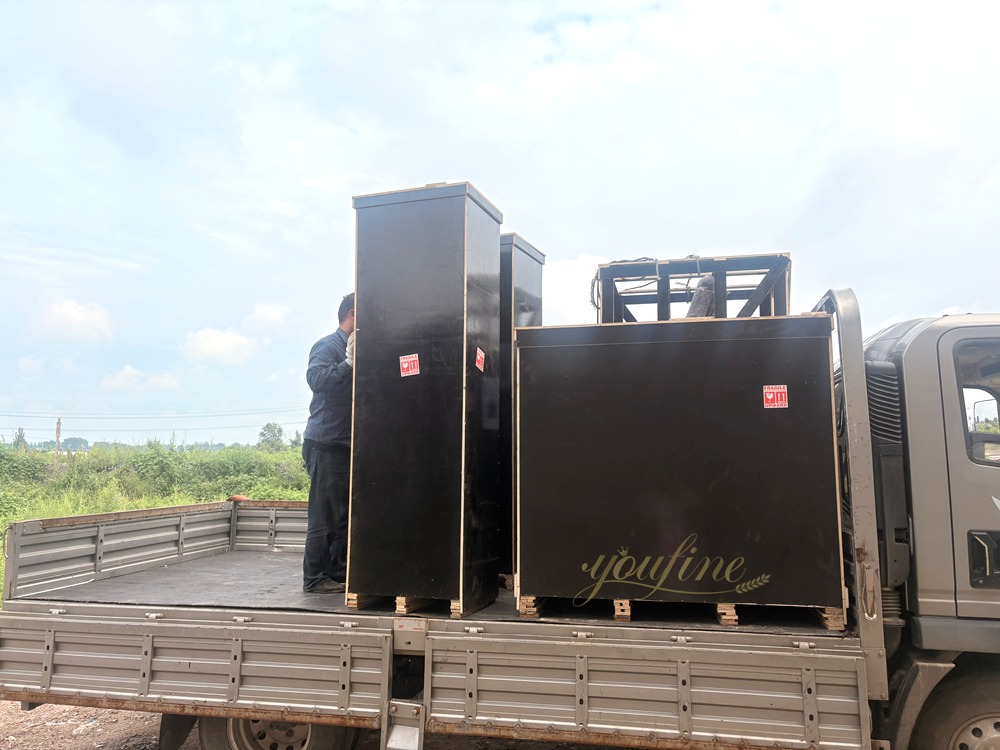
Step 11: Final Inspection, Packaging & Global Export
Before delivery, we provide:
- Detailed photos and videos
- Optional online inspection
- Protective wax coating for transit
We use:
- Reinforced export wooden crates
- Moisture-proof protection
- Flexible trade terms (EXW, FOB, CIF, DDP in some regions)
Our professional export team serves clients in:
- Europe
- North America
- Middle East
- Australia
- Canada
We understand high-end market standards and deliver accordingly.
Why the Entire Process Matters
When people ask how bronze statues are made, they often focus only on the metal.
However, the key factors are:
- Clay model realism
- Silicone mold precision
- Proper sand shell formation
- Controlled bronze casting
- Professional patina
- Protective finishing
Every stage contributes to whether the final sculpture looks alive — or ordinary.
The Key to Lifelike Bronze Sculpture
When people ask how bronze statues are made, they often focus on the metal.
But the real secret lies in the clay model.
If the clay model is truly realistic — with accurate anatomy, layered fur texture, and expressive detail — the bronze sculpture will look alive.
At YouFine, we prioritize realism from the first touch of clay to the final protective coating.
Are Bronze Statues Worth the Investment?
Absolutely.
Bronze sculptures:
- Last for generations
- Withstand outdoor climates
- Enhance estate and project value
- Increase brand prestige
- Become timeless artistic assets
From private villas and castles to museums and public landmarks, bronze statues are both artistic and architectural investments.
Why Work With YouFine Bronzes Gallery?
When choosing a bronze sculpture manufacturer, experience and craftsmanship matter.
At YouFine, you benefit from:
✔ Over 40 years of casting experience
✔ Skilled clay model artists
✔ Traditional lost-wax expertise
✔ Reinforced sand mold technology
✔ Custom size and design capability
✔ Engineering support for large installations
✔ Stable export and global delivery service
We serve:
- Villas and private estates
- Museums and cultural institutions
- Luxury developments
- Golf courses and hunting grounds
- Art galleries and consultants
Our goal is not simply to produce sculptures, but to create lasting artistic landmarks.
Ready to Commission Your Bronze Sculpture?
Whether you are planning:
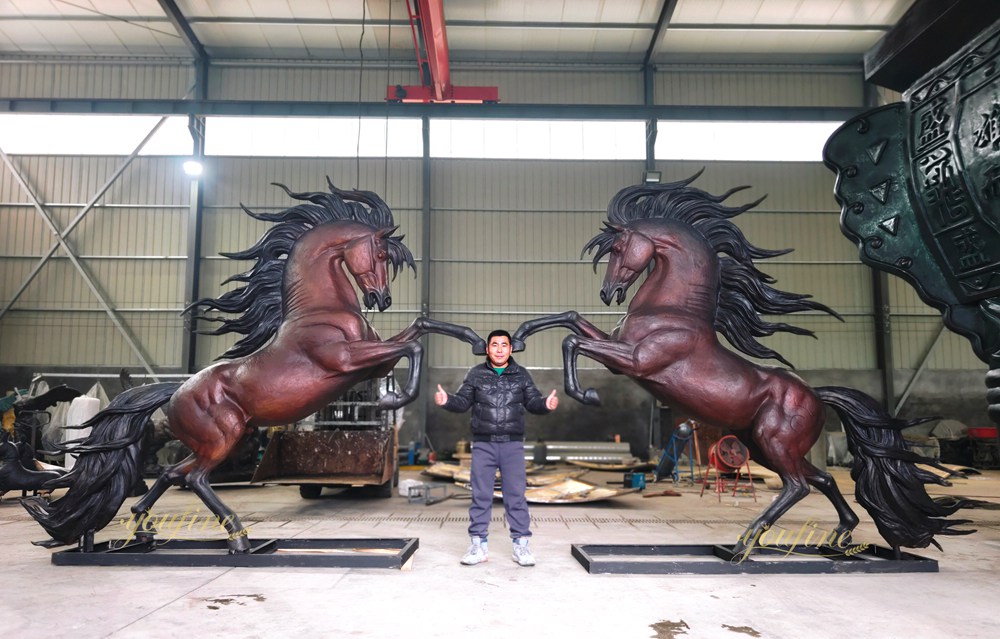
- A life-size animal statue
- A monumental public sculpture
- A bronze fountain
- A custom portrait
- A private estate centerpiece
YouFine Bronzes Gallery is ready to bring your vision to life.
Our team will guide you from design to installation, ensuring museum-level quality and long-term durability.
👉 Contact us today to start your bronze sculpture project.
Let’s create a timeless masterpiece together.
Frequently Asked Questions (FAQ)
1. How long does it take to make a bronze statue?
Production typically takes 30–60 days, depending on size and complexity, including clay modeling, mold making, casting, welding, and finishing.
2. Are bronze statues hollow or solid?
Most high-quality bronze statues are hollow cast. This ensures structural stability, controlled weight, and better long-term durability.
3. Do bronze statues turn green?
Bronze may develop a natural green patina over time due to oxidation. However, protective coatings and maintenance can control or prevent excessive color change.
4. How long do bronze sculptures last?
With proper care, bronze sculptures can last hundreds of years — making them one of the most durable artistic investments.
5. Why is clay modeling important?
The clay model determines the final detail and quality of the sculpture. Superior clay artistry leads to superior bronze results.
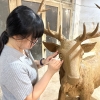
Panda, a 20-year veteran of bronze casting, is one of the co-founders and lead artisan of YouFine Art Bronze Foundry. Deeply rooted in the foundry, she has mastered every detail of the craft. Her expertise guarantees that each sculpture embodies the highest standards of quality and artistic integrity.