
From my experience working in the Rome sculpture industry, I have learned that few subjects generate as much genuine curiosity as the Lady Justice statue. Clients commission her for courthouses, law firms, universities, and public plazas — but they almost always want to understand what she actually means before they place an order. That curiosity is well-founded. Lady Justice is not simply a decorative figure. She carries thousands of years of legal philosophy in her hands, literally and symbolically.
What makes her especially interesting right now is that her symbolism is being debated in ways it has not been for centuries. Should she still wear a blindfold? Does her imagery reflect the justice systems we actually have, or the ones we aspire to build? Can an algorithm be as impartial as a blindfolded goddess? These are live questions in courtrooms, law schools, and public discourse — and they make the Lady Justice statue far more than a traditional legal emblem.
In this article, I will walk through what Lady Justice represents, where she came from, what her symbols mean, how she has evolved in art and sculpture, and why bronze remains the material of choice for serious installations.

What Does the Lady Justice Statue Represent?
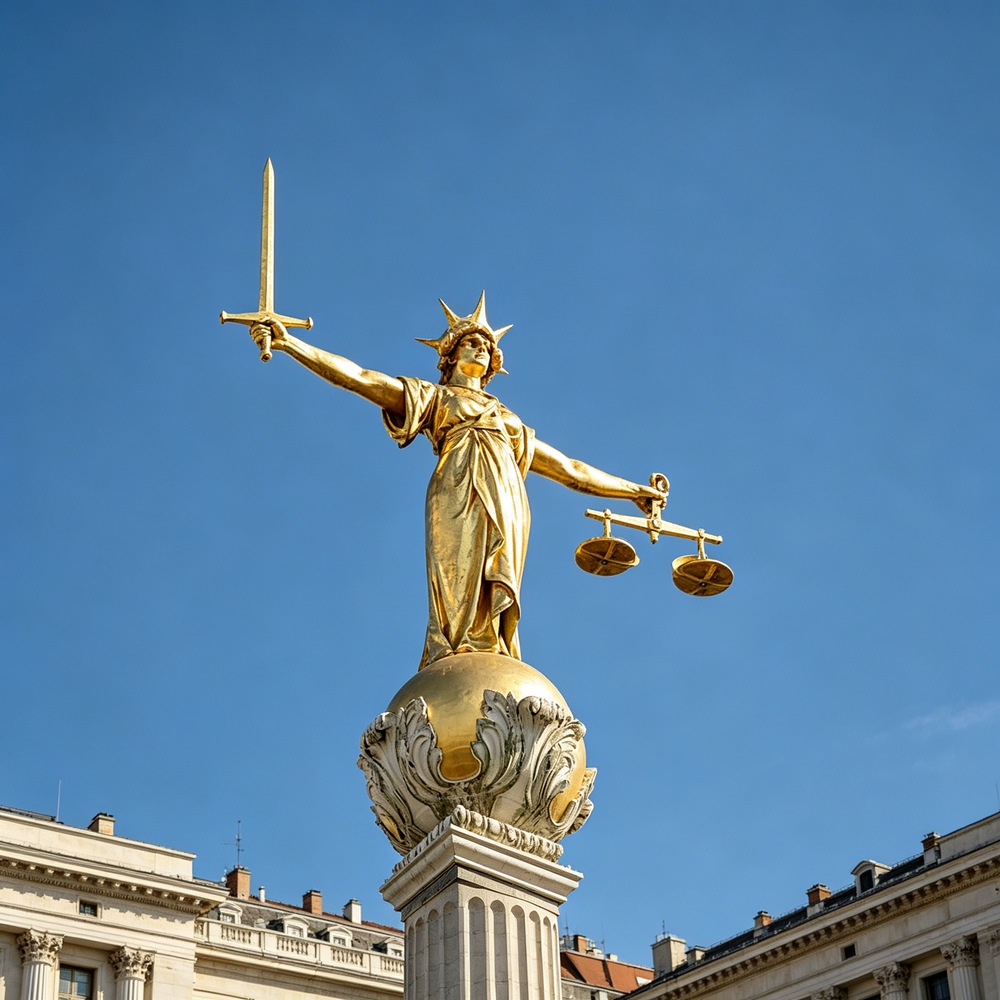
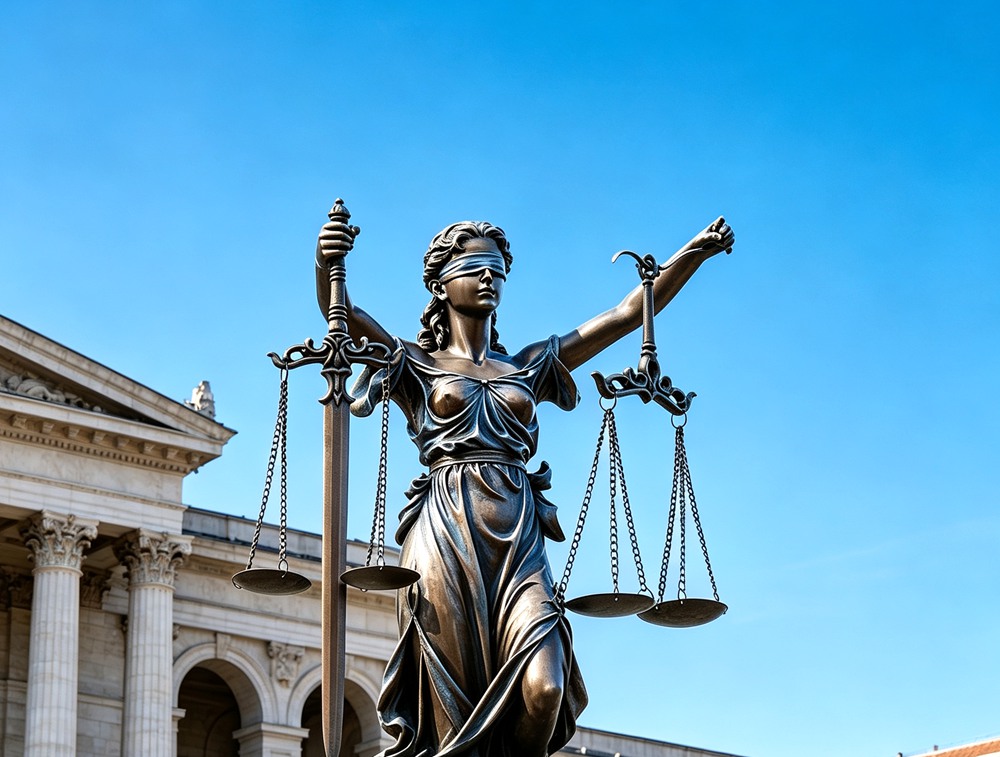
Lady Justice is the personification of the legal system's highest ideals. Each element of her appearance carries a specific meaning, and together they communicate a complete philosophy of law.
Fairness and Equality
Lady Justice represents the principle that the law should treat every person equally, regardless of wealth, rank, or social standing. This ideal is foundational to modern democratic legal systems, even when practice falls short of it.
Impartiality
Her most discussed attribute is impartiality — the idea that a judge must not favor one party over another. This is the concept behind her blindfold, which I will explain in detail below.
Balance and Judgment
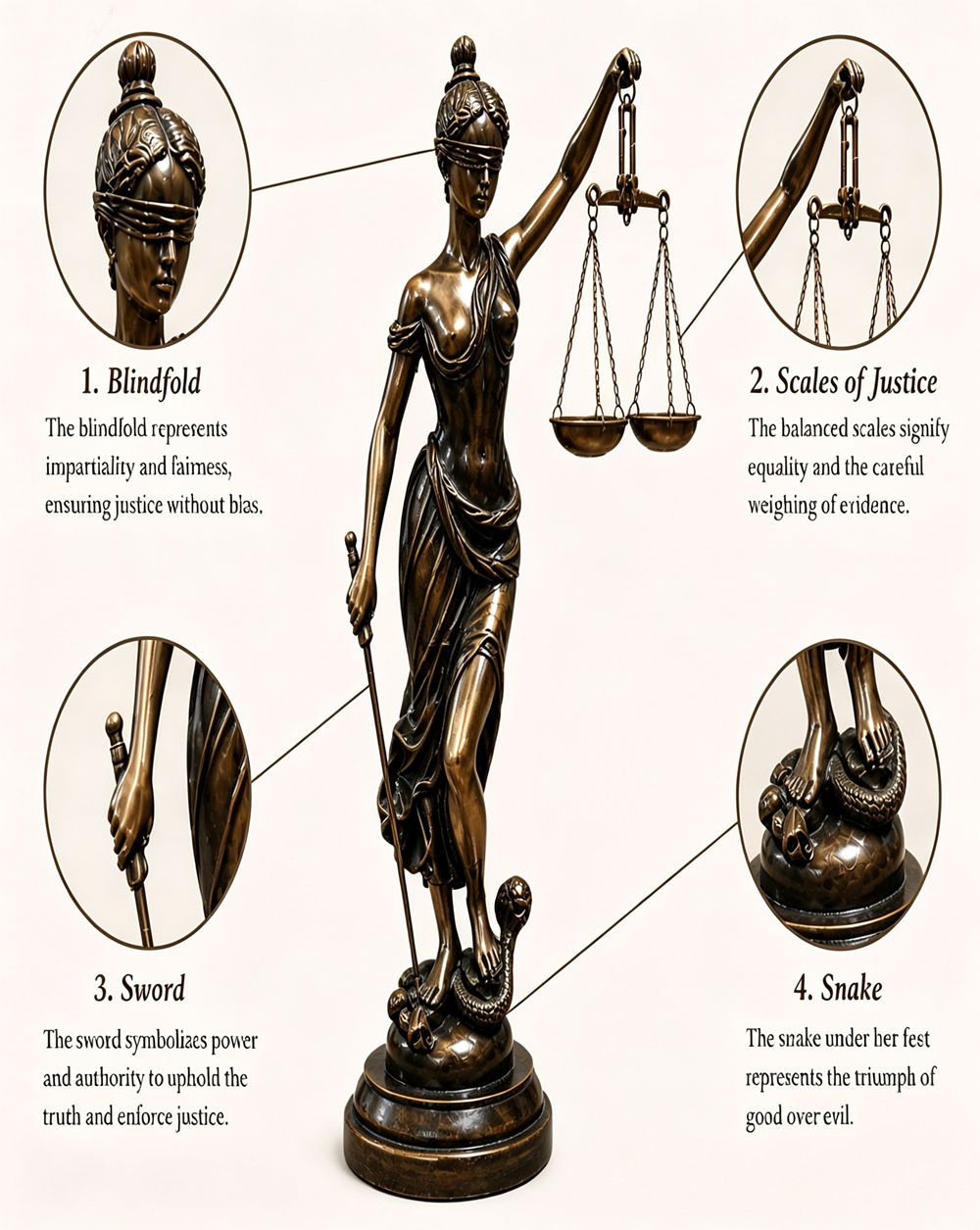
The scales she holds represent the careful weighing of evidence and argument before a verdict is reached. Good judgment, in the legal sense, means considering both sides before deciding.
Authority of the Law
Her sword signals that the law has real power. Justice is not merely an aspiration; it is enforced. The sword reminds us that legal decisions carry consequences.
The Rule of Law
Taken together, her attributes represent the rule of law itself — the principle that no individual, including those in power, stands above a fair and consistent legal system.
What Do the Symbols of Lady Justice Mean?
What Do the Scales of Justice Mean?
The scales — technically called a balance scale or beam scale — represent the weighing of evidence. In a legal context, they symbolize the obligation to hear both sides of a dispute before reaching a verdict. The scales also suggest proportionality: that punishment should match the offense.
What Does the Sword of Justice Mean?
The sword represents the authority and enforcement power of the law. It is typically depicted pointing downward or held upright, signaling readiness rather than aggression. The sword communicates that justice, once delivered, is final and binding.
Why Is Lady Justice Blindfolded?
The blindfold is the most debated of her symbols. It represents impartiality — the idea that justice should be delivered without regard to the identity, appearance, wealth, or status of the parties involved. A blindfolded judge cannot be swayed by who stands before her.
Interestingly, the blindfold was not part of the original imagery. I will cover that history in the section below.
The History and Origins of Lady Justice
Ancient Egypt and Ma'at
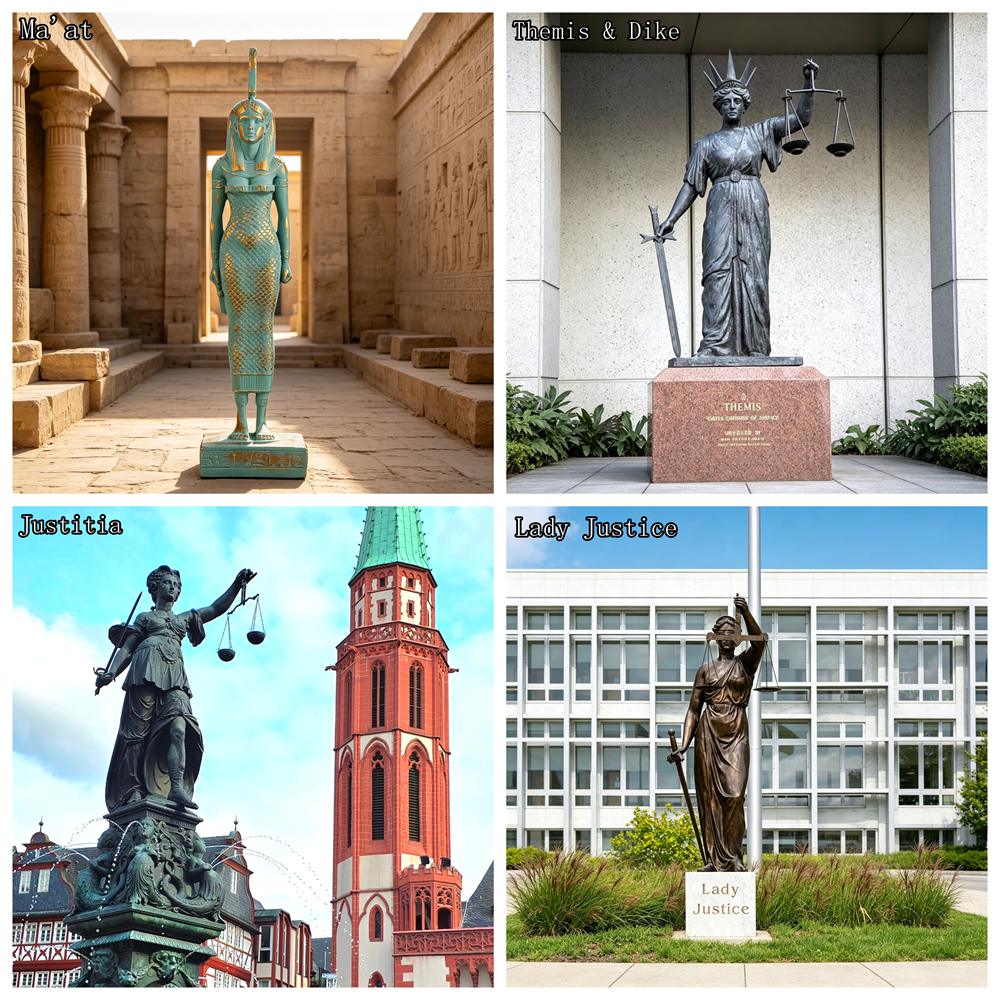
The concept of divine justice personified as a female figure goes back at least to ancient Egypt. Ma'at was the goddess of truth, justice, and cosmic order.[^1] She was depicted with a feather on her head — the feather of truth[^2] — and was said to weigh the hearts of the dead against that feather in the afterlife. Those whose hearts were heavier than the feather had lived unjustly. The scales appear here, thousands of years before Roman law.
Themis and Dike in Ancient Greece
Ancient Greece gave the Western legal tradition two important figures. Themis was a Titaness and the goddess of divine law, order, and custom.[^3] She was often depicted holding scales and sometimes a sword. Her daughter Dike (also spelled Dikē) was the goddess of human justice and moral order.^4 Dike was said to report injustices to Zeus directly. Both figures contributed attributes that would eventually merge into the Lady Justice we recognize today.
Roman Justitia
The Romans adapted the Greek tradition and created Justitia, the personification of justice in Roman religion and law. Justitia was depicted holding scales and a sword, and she was associated with the emperor's authority[^5] to deliver justice. The Roman legal system — one of the most influential in history — gave Justitia a formal role as a symbol of the state's judicial power. Many of the Lady Justice statues seen in European and American courthouses today descend directly from this Roman tradition.
Medieval Europe
During the medieval period, the imagery of justice continued through Christian iconography and allegorical art. Justice was counted among the four cardinal virtues (alongside prudence, fortitude, and temperance)[^6], and she appeared frequently in church art, illuminated manuscripts, and civic buildings. The sword and scales remained her standard attributes.
The Modern Lady Justice
From the Renaissance onward, Lady Justice became a standard feature of courthouses, legal seals, and civic monuments across Europe and eventually the Americas. Her image was codified and widely reproduced. Today she appears on the facades of supreme courts, in law school lobbies, on legal seals and currency, and as a popular subject for custom bronze sculpture.

What Does Lady Justice Look Like?
Lady Justice is almost always depicted as a robed female figure. Her specific appearance varies by era, culture, and artistic interpretation, but four elements appear consistently.
Robe
She wears a long classical robe, typically modeled on ancient Greek or Roman dress. The robe conveys dignity, authority, and timelessness. In sculpture, the folds of the robe are one of the most technically demanding elements to execute well.
Scales
She holds a balance scale, usually in her left hand. The scale is often depicted in equilibrium, suggesting balance and fairness.
Sword
She holds a sword, usually in her right hand. In some interpretations it is sheathed; in others it is bare, emphasizing the law's readiness to act.
Blindfold
A cloth blindfold covers her eyes. This is the element most subject to modern reinterpretation — some contemporary sculptures deliberately remove it to make a statement about justice and visibility.
When Did Lady Justice Become Blindfolded?
This is one of the most common questions I receive from clients, and the answer surprises many people. The blindfold was not part of the original imagery of Themis, Dike, or Justitia. In classical antiquity, justice was depicted with open eyes — she could see clearly, and that was considered a virtue.
The blindfold appears in European art around the late 15th and early 16th centuries.[^7] Interestingly, its earliest uses were satirical. Artists used the blindfold to criticize the justice system — implying that justice was blind to corruption, incompetence, or the suffering of ordinary people. It was a critique, not a compliment.
Over the following centuries, the meaning was reinterpreted. The blindfold was gradually adopted as a positive symbol of impartiality — the idea that justice does not see (and therefore cannot be influenced by) the identity of those who stand before it. By the 18th and 19th centuries, the blindfolded Lady Justice had become the standard image in most Western legal traditions.
This history matters today because the debate about the blindfold has reopened. Critics argue that a justice system that is "blind" to identity may also be blind to systemic inequality — that true fairness sometimes requires seeing and acknowledging difference rather than ignoring it. Supporters of the traditional image argue that impartiality remains the correct ideal. This is not a settled question, and it is reflected in how contemporary artists and institutions choose to depict Lady Justice.
Lady Justice vs. Themis vs. Dike vs. Justitia
These four figures are related but distinct. The table below summarizes the key differences.
| Figure | Origin | Role | Key Attributes |
|---|---|---|---|
| Ma'at | Ancient Egypt | Cosmic truth and order | Feather of truth, scales |
| Themis | Ancient Greece | Divine law and order | Scales, sometimes sword |
| Dike | Ancient Greece | Human justice and morality | Scales, associated with Zeus |
| Justitia | Ancient Rome | State justice and legal authority | Scales, sword, sometimes blindfold |
| Lady Justice | Medieval–Modern West | Personification of the legal ideal | Scales, sword, blindfold, robe |
Each figure contributed something to the composite image we call Lady Justice today. Themis and Dike provided the Greek philosophical foundation. Justitia provided the Roman legal authority. The medieval and Renaissance periods added the blindfold and refined the visual language. The modern Lady Justice is a synthesis of all of these traditions.
Lady Justice in Sculpture and Art
Lady Justice has been depicted in sculpture for centuries, and the artistic choices made in each representation carry meaning. From my experience producing custom bronze figures, I can say that clients commissioning a Lady Justice statue often have strong preferences about which version they want — and those preferences usually reflect their own understanding of what justice means.
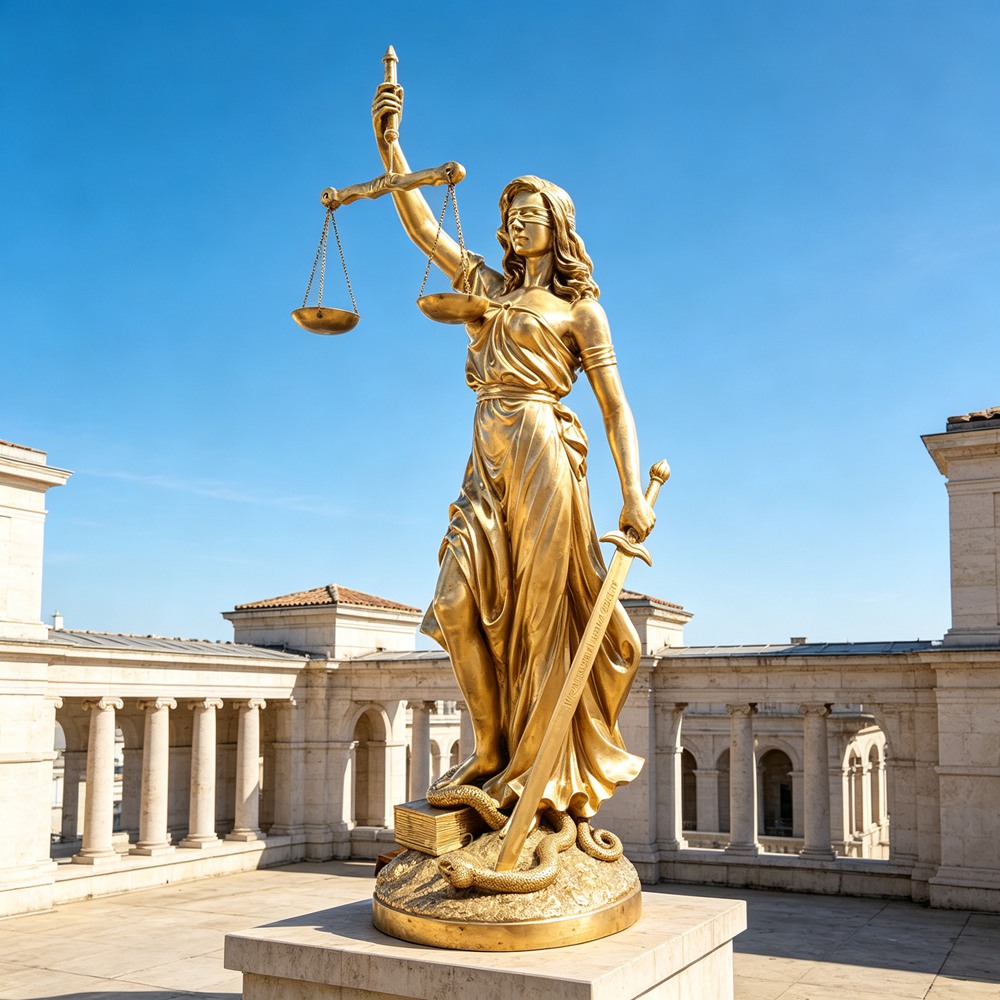
Standing Lady Justice
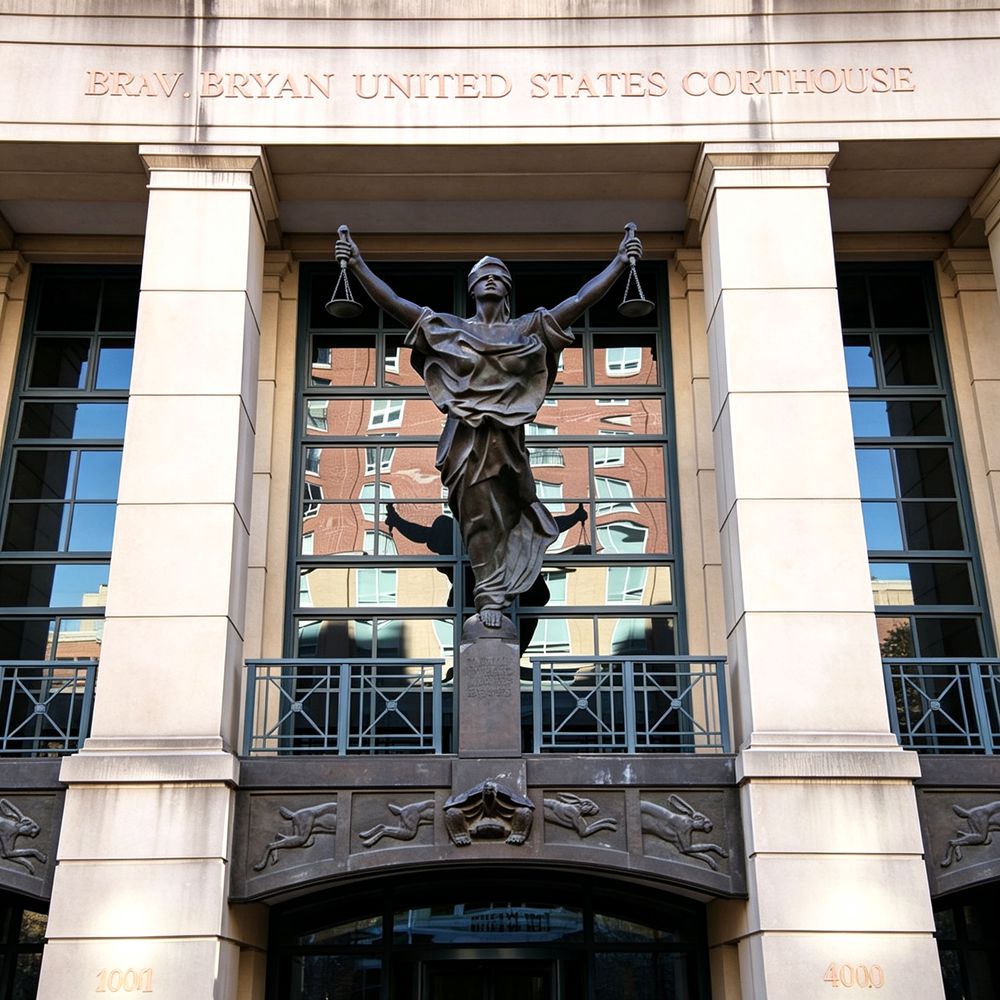
The standing figure is the most common format for monumental and architectural installations. She projects authority and permanence. Standing Lady Justice statues are typically placed at courthouse entrances, on building facades, or in public plazas.
Seated Lady Justice
A seated figure conveys deliberation and judgment rather than active authority. Seated versions appear more frequently in interior settings — courtrooms, law libraries, and institutional lobbies.
Blindfolded Lady Justice
The blindfolded version is the most widely recognized in the United States and much of Europe. It is the standard choice for institutions that want to emphasize impartiality as the central value of their legal system.
Lady Justice Without a Blindfold
Some contemporary installations deliberately omit the blindfold. This choice is a statement — it suggests that justice must be aware of social context, systemic inequality, or the lived realities of those who appear before the law. Several notable modern courthouses and legal institutions have commissioned open-eyed Lady Justice figures for exactly this reason.
Modern Interpretations
Contemporary sculptors and clients have explored a wide range of reinterpretations: Lady Justice in non-Western dress, figures that incorporate elements from multiple cultural traditions, abstract versions that reduce her to pure geometric form, and politically engaged works that use her imagery to comment on specific legal controversies. These modern interpretations reflect the ongoing debate about what justice should look like in the 21st century.
Where Can a Lady Justice Statue Be Installed?
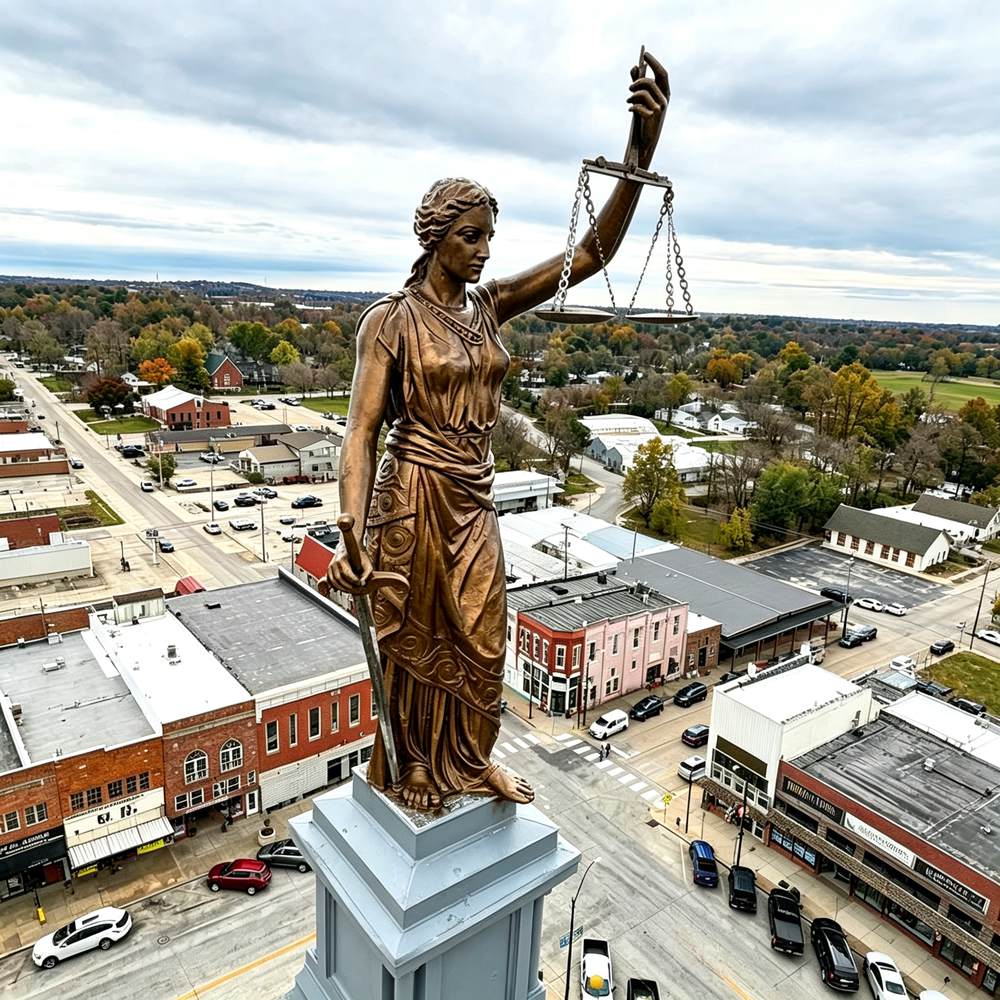
Lady Justice is one of the most versatile subjects in institutional sculpture. Here are the most common installation contexts.
Courthouses (Entrances, Domes, Courtrooms)
Courthouses are the natural home of Lady Justice. She appears above entrance doors, on rooftop domes, in lobby niches, and inside courtrooms themselves. Large-scale outdoor installations at courthouse entrances are among the most common commissions in this category.
Law Firms
Law firms commission Lady Justice statues for reception areas, conference rooms, and partner offices. These are typically smaller, more refined pieces — life-size or smaller — that signal the firm's professional values to clients and visitors.
Law Schools
Universities and law schools use Lady Justice statues to reinforce institutional identity and inspire students. These installations range from decorative desk pieces to large outdoor monuments on campus grounds.
Government Buildings
Legislative buildings, justice ministries, and government offices frequently incorporate Lady Justice into their architectural programs. These commissions often involve close collaboration with architects and public art consultants.
Legal Institutions
Bar associations, legal aid organizations, and judicial councils commission Lady Justice statues for their headquarters and event spaces.
Public Spaces
Parks, civic plazas, and memorial gardens sometimes feature Lady Justice as part of a broader public art program, particularly in communities with a strong legal or civic heritage.
Why Is Bronze a Popular Material for Lady Justice Statues?
Bronze has been the dominant material for monumental sculpture for more than three thousand years, and for good reason. From my experience working with clients on institutional commissions, bronze is almost always the first material they ask about — and usually the right choice.
The table below summarizes the key reasons.
| Factor | What Bronze Offers | Why It Matters for Lady Justice |
|---|---|---|
| Outdoor durability | Resists corrosion, UV, and temperature change | Suitable for courthouse facades and public plazas |
| Fine detail | Captures fabric folds, facial features, and fine textures | Essential for a figure with complex symbolic attributes |
| Patina | Develops a natural aged finish over time | Adds gravitas and visual depth to institutional pieces |
| Monumental scale | Structurally sound at large sizes | Supports life-size and oversized installations |
| Lost-wax casting | Allows complex, hollow forms with high fidelity | Reproduces the sculptor's original model with precision |
Outdoor Durability
Bronze alloy — typically a mixture of copper and tin, sometimes with small additions of zinc or lead[^8] — is highly resistant to corrosion. A properly finished and maintained bronze statue can last centuries outdoors. This is critical for courthouse and government installations, where permanence is part of the message.
Fine Detail
The lost-wax casting process (also called cire perdue) allows sculptors to capture extremely fine surface detail — the texture of fabric, the expression of a face, the delicate links of a chain on a scale. Lady Justice has many such details, and bronze handles them better than most alternative materials.
Patina
Bronze develops a natural patina (a surface layer formed by oxidation) over time. This patina can range from warm brown to deep green, depending on the environment and any applied chemical treatments. Many clients specifically request a particular patina color to match their building's aesthetic. The patina also signals age and authority — qualities that suit a figure representing the law.
Monumental Scale
Bronze is structurally sound at large sizes. A hollow-cast bronze figure can be scaled to almost any height while remaining stable and weather-resistant. This makes it the practical choice for large outdoor installations.
Lost-Wax Casting
Lost-wax casting is the traditional and still-preferred method for producing high-quality bronze sculpture. The process involves creating a detailed wax model, encasing it in a sand shell, melting out the wax, and pouring molten bronze into the resulting mold. The result is a hollow bronze casting that faithfully reproduces the original model. YouFine Bronze Foundry has used this method for more than 40 years to produce custom bronze figures for international clients.
Custom Bronze Lady Justice Statues
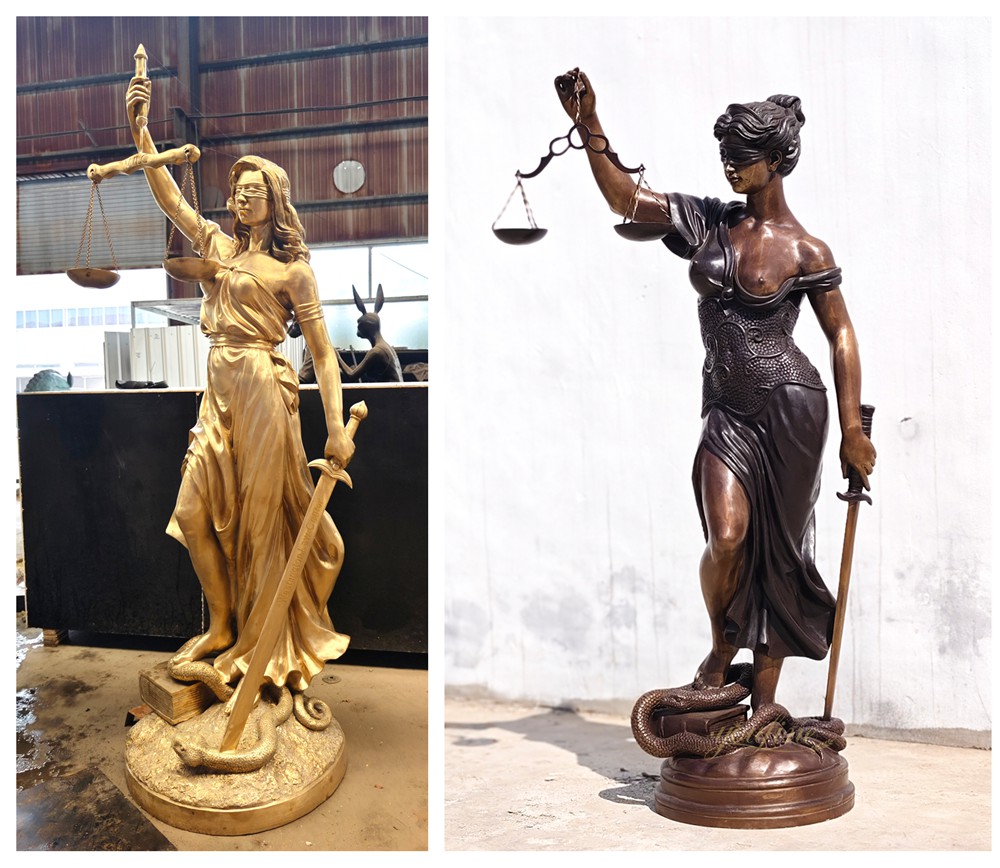
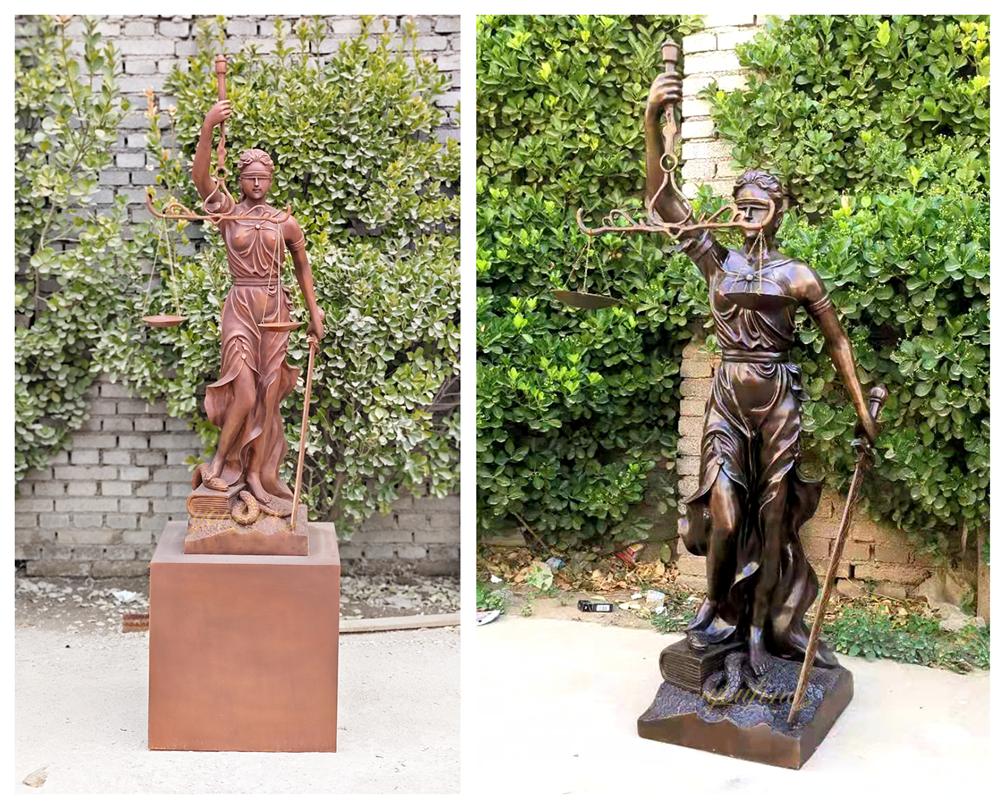
Every Lady Justice commission is different. Clients have specific requirements about size, pose, blindfold, patina color, base design, and installation context. From my experience, the most successful commissions begin with a clear brief that addresses all of these variables before production starts.
YouFine Bronze Foundry produces custom Lady Justice statues from initial concept through to export-ready delivery. The production process typically includes:
- Design consultation — discussing the client's vision, installation context, and symbolic preferences (blindfolded or not, standing or seated, scale, pose)
- Structural support — engineering internal armature (the internal support structure) for large-scale pieces
- 3D modeling — producing a digital model for client review and approval before any physical work begins
- Clay modeling — creating a full-scale clay model (a preliminary model) for detailed review
- Lost-wax casting — producing the bronze casting from the approved model
- Polishing and finishing — hand-polishing the surface to remove casting marks and refine detail
- Patina application — applying the chosen patina finish using chemical treatments and heat
- Export packaging and shipping — reinforced crating and international freight coordination
The foundry is located in Quyang, Hebei — a region with a centuries-long tradition of sculpture production and a concentration of skilled craftspeople. This environment supports the kind of specialized, detail-oriented work that a Lady Justice commission requires.
Frequently Asked Questions
Why does Lady Justice sometimes not have a blindfold?
The blindfold was added to Lady Justice's imagery around the late 15th century — originally as a satirical critique of justice systems that ignored corruption or inequality. Over time it was reinterpreted as a symbol of impartiality. Today, some institutions deliberately commission open-eyed Lady Justice figures to suggest that justice must be aware of social context and systemic inequality, not blind to it. The choice is a deliberate statement about legal philosophy.
How does AI bias relate to Lady Justice symbolism?
AI bias relates to Lady Justice because both concern fairness in decision-making. If AI tools are used in legal research, policing, risk assessment, or court administration, people must ask whether the system weighs evidence fairly and avoids unfair discrimination. Lady Justice remains a useful symbol for this modern question.
What is the difference between Lady Justice and Themis?
Themis is a specific goddess from ancient Greek mythology — a Titaness representing divine law and order. Lady Justice is a broader, composite figure that developed through Roman, medieval, and modern Western legal tradition. Lady Justice draws on Themis, her daughter Dike, and the Roman Justitia, but she is not identical to any one of them. Themis is a deity; Lady Justice is an allegorical personification of the legal ideal.
What size Lady Justice statue is appropriate for a courthouse entrance?
Size depends on the scale of the building and the installation context. For a prominent courthouse entrance, life-size (approximately 1.7–1.8 meters) to oversized (2.5–4 meters or more) figures are most common. Larger figures read better from a distance and carry more visual authority in an architectural setting. A structural engineer and the foundry should both be consulted for very large installations to ensure the internal armature and mounting system are correctly specified.
How long does it take to produce a custom bronze Lady Justice statue?
Production time depends on size and complexity. A life-size custom bronze figure typically requires approximately 60–90 days from approved design to shipping-ready. Larger or more complex pieces may take longer. The design and approval stages — 3D modeling and clay model review — add time at the front of the process, but they are essential for ensuring the final piece matches the client's vision.
Conclusion:What Lady Justice Means Today
Lady Justice has traveled a long path: ancient balance, Greek law, Roman Justitia, medieval virtue, courthouse architecture, modern equality debates, and now questions about AI and algorithmic fairness.
That long history is exactly why the Lady Justice Statue remains powerful. She is not only a symbol of old legal tradition. She is also a living image that asks every generation to define fairness again.
For a traditional courthouse, she may stand blindfolded with scales and sword. For a modern law school, she may appear with open eyes and a more inclusive identity. For a public plaza, she may become a contemporary artwork about equality and trust.
From my experience, the best bronze Lady Justice Statue combines three things: clear symbolism, strong craftsmanship, and a message that fits the place where it will stand.
Custom Lady Justice Statue Support
If you are planning a custom bronze Lady Justice Statue for a courthouse, law firm, university, government building, public space, or private collection, I can help you think through the key sculpture decisions before production begins.
YouFine Bronze Foundry manufactures custom bronze sculptures in Quyang, Hebei, China, with services covering design, 3D modeling, clay modeling, lost-wax casting, patina finishing, export packaging, and international shipping coordination. For a project inquiry, prepare the desired size, installation site, style reference, and symbolic preferences, and I can guide the next discussion in a practical way.
References
[^1]: Maat - Wikipedia
[^2]: Maat - Wikipedia
[^3]: Themis - Wikipedia
[^5]: Lady Justice - Wikipedia
[^6]: Cardinal virtues - Wikipedia
[^7]: Lady Justice - Wikipedia
[^8]: Bronze - Wikipedia

Panda, a 20-year veteran of bronze casting, is one of the co-founders and lead artisan of YouFine Art Bronze Foundry. Deeply rooted in the foundry, she has mastered every detail of the craft. Her expertise guarantees that each sculpture embodies the highest standards of quality and artistic integrity.