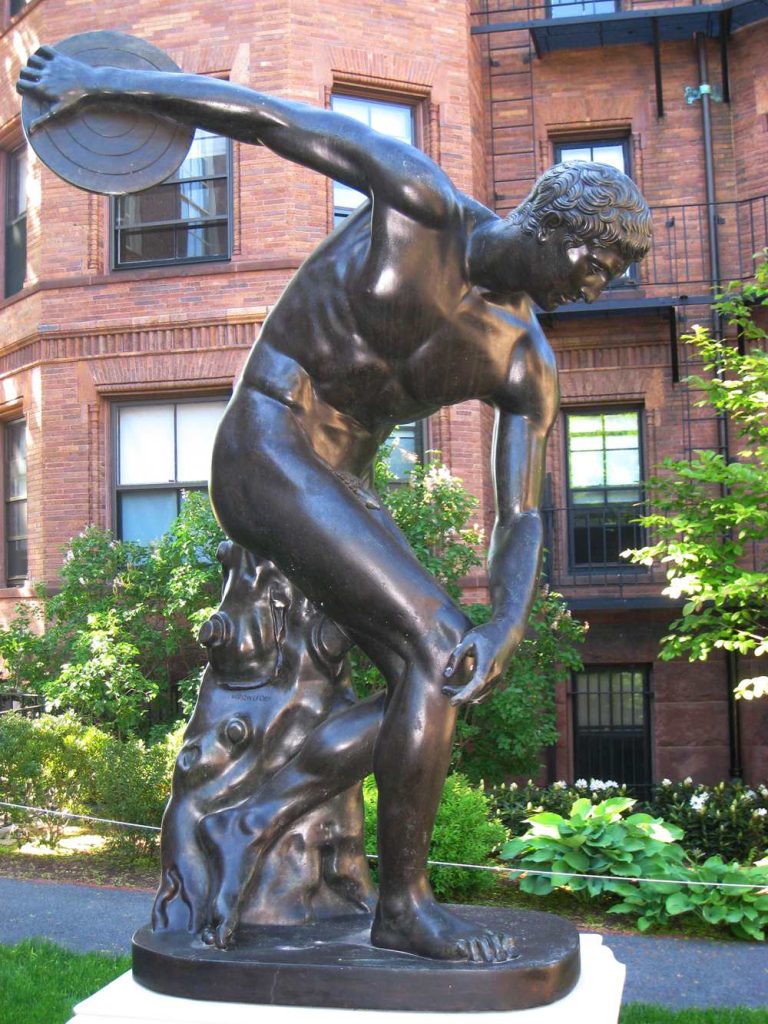

From my experience working in the bronze sculpture industry, I have learned that the Perseus and Medusa Statue attracts two very different kinds of attention. Some people first approach it as a famous Renaissance artwork. Others see it as a powerful subject for a custom bronze sculpture, suitable for a villa, garden, gallery, cultural project, or classical collection.
Both views are important.
The original statue by Benvenuto Cellini is not only a dramatic mythological scene. It is also a technical achievement in bronze casting, a political symbol, and a lasting example of how sculpture can communicate power, victory, beauty, and danger in one image. For today’s buyers, this makes the Perseus and Medusa theme especially attractive when commissioning a custom bronze sculpture.
In this article, I will explain the history, meaning, myth, bronze material value, and practical commissioning process for a bronze Perseus statue. I will also share what I consider important when a client wants a museum-inspired piece, a faithful classical reproduction, or a custom interpretation for a modern project.
The Original Perseus and Medusa Statue
The most famous Perseus and Medusa Statue is Perseus with the Head of Medusa ^1 by the Italian Renaissance sculptor Benvenuto Cellini. It is one of the most important bronze sculptures in Florence and one of the best-known mythological statues in Western art.
Location and History
The statue stands in the Loggia dei Lanzi, an open-air sculpture gallery beside the Piazza della Signoria in Florence, Italy. This location matters very much. Piazza della Signoria has long been connected with civic power, public ceremony, and political identity in Florence.
The Loggia dei Lanzi is not a hidden museum room. It is an architectural stage in the heart of the city. Sculptures placed there are seen in relation to public authority, historical memory, and the artistic achievements of Florence. When Cellini’s Perseus ^2 was installed there, it was not only displayed as a beautiful artwork. It also became part of a public message.
Perseus stands holding the severed head of Medusa. His body is calm, controlled, and victorious. Medusa’s body lies beneath him. The visual effect is immediate: the hero has defeated a deadly force, and order has overcome chaos.
From my experience discussing classical sculpture subjects with buyers, I find that this public, symbolic quality is one reason the Perseus theme remains so popular. It does not feel like a passive decorative statue. It has a strong narrative and a commanding presence.
| Element | Historical Importance | Why It Matters for Buyers Today |
|---|---|---|
| Loggia dei Lanzi | Public sculpture gallery in Florence | Connects the statue with civic power and Renaissance art |
| Piazza della Signoria | Historic political center of Florence | Adds authority and public meaning to the artwork |
| Mythological subject | Perseus defeating Medusa | Creates a dramatic story of victory and courage |
| Bronze medium | Durable and technically demanding material | Makes the statue suitable for lasting monumental sculpture |
For a modern commission, these historical associations can guide the design. A Perseus statue can be created as a classical focal point, a symbolic entrance sculpture, or a cultural artwork with strong storytelling value.
Creation of the Perseus and Medusa Statue
Benvenuto Cellini’s Masterpiece
Benvenuto Cellini created Perseus with the Head of Medusa under a commission that began in 1545 and was completed in 1554. Cellini was not only a sculptor. He was also a goldsmith, designer, and writer, known for his technical skill and bold artistic personality.
The statue is famous partly because of its casting challenge. A large bronze sculpture is difficult because the artist and foundry must control the model, mold, wax, metal flow, cooling, welding, surface chasing, and finishing. Even today, a complex bronze figure with raised arms, detailed anatomy, and multiple visual angles requires careful planning.
Cellini’s Perseus is especially impressive because the figure is not simple or compact. Perseus holds Medusa’s head high, creating a dramatic vertical composition. The details include the hero’s anatomy, helmet, sword, sandals, Medusa’s face, hair, and the base reliefs. The statue had to succeed both artistically and technically.
From my experience with custom bronze sculpture production, I know that buyers often focus first on the front view of a statue. But a sculpture like Perseus must work from many directions. Outdoor statues, gallery sculptures, and public installations are walked around. This means the pose, silhouette, balance, and back view must be considered from the design stage.
That is one reason classical masterpieces remain valuable references. They teach practical lessons about proportion, movement, anatomy, and visual control.
Symbolism of the Perseus and Medusa Statue
Themes and Meanings
The Perseus and Medusa Statue carries several layers of meaning. Its power comes from the way it combines myth, politics, heroism, and artistic skill.
At the surface level, the statue shows victory. Perseus has defeated Medusa^2, a monster whose gaze could turn people to stone. He stands over her body and lifts her head as proof of success.
On a deeper level, the statue can symbolize control over fear, reason over danger, and courage against impossible odds. In the Renaissance setting, it also suggested political strength and the power of the ruling authority.
For many modern buyers, the symbolism can be adapted according to the project.
| Theme | Meaning in the Statue | Possible Modern Use |
|---|---|---|
| Victory | Perseus defeats Medusa | Entrance sculpture, trophy space, leadership project |
| Heroism | A mortal hero completes a dangerous task | Cultural garden, university, private estate |
| Power | The raised head becomes a public sign of control | Civic, institutional, or architectural project |
| Transformation | Medusa’s gaze turns life into stone | Art collections exploring myth and psychology |
| Artistic mastery | Bronze casting proves technical skill | Gallery, museum-inspired collection, foundry showcase |
In my view, one unique value of this subject is that it can be both classical and personal. A client may want a statue close to Cellini’s Renaissance style, or a more modern interpretation with simplified forms, stronger emotional contrast, or different scale. The key is to decide early whether the project goal is historical reproduction, symbolic reinterpretation, or decorative classical beauty.
Story Behind Perseus and Medusa
The myth of Perseus and Medusa is one of the most dramatic stories in Greek mythology.
Medusa was one of the Gorgons. Her face was so terrifying that anyone who looked directly at her would turn to stone. Perseus was sent to kill her, a task that seemed almost impossible. With help from the gods, he received special tools: a reflective shield, winged sandals, a sword, and a helmet of invisibility.
Instead of looking directly at Medusa, Perseus used the reflection in his shield to find her safely. He then cut off her head. Later, the head of Medusa itself became a powerful weapon because it still held its deadly force.
This story gives the statue its visual drama. Perseus is not only strong. He is intelligent. He wins through courage, discipline, and strategy. That is why the sculpture does not need exaggerated movement to feel powerful. The calm pose after victory can be even more impressive than a scene of active battle.
When I advise buyers on mythological bronze statues, I usually suggest thinking beyond “which famous figure do I like?” A successful commission should match the message of the location. Perseus works well when the intended feeling is courage, triumph, protection, intelligence, or classical authority.
Why Bronze for Perseus and Medusa?
Bronze is one of the best materials for a Perseus and Medusa Statue because the subject requires strength, detail, and long-term presence. The raised arm, sword, detailed head, anatomical form, and dramatic base all benefit from bronze’s casting ability.
Bronze can capture fine details such as facial expression, hair texture, muscle form, armor decoration, and base ornament. At the same time, it is strong enough for outdoor display when properly cast, welded, finished, and maintained.
In custom bronze sculpture, the most respected traditional method is lost-wax casting^4. This is a bronze casting technique in which a wax version of the sculpture is made from a mold. The wax is then replaced by molten bronze through a controlled casting process. This method is especially suitable for complex figure sculpture because it preserves detailed modeling.
| Material or Method | Strengths | Considerations |
|---|---|---|
| Bronze | Durable, detailed, classical, suitable for indoor and outdoor use | Requires skilled casting and finishing |
| Marble or stone | Classical and elegant, strong historical association | More difficult for thin raised elements and complex undercuts |
| Resin or fiberglass | Lightweight and lower-cost for decorative use | Less permanent and less prestigious than bronze |
| Lost-wax casting | Excellent detail and traditional bronze quality | Needs experienced mold making, casting, welding, and chasing |
| Sand casting | Useful for some forms and industrial parts | Usually less ideal for highly detailed figure sculpture |
For a Perseus statue, I consider bronze the most suitable choice when the buyer wants long-term value, fine detail, and a serious classical appearance. A bronze version can be displayed indoors, in a courtyard, in a garden, near an institutional entrance, or as part of a larger landscape design.
Crafting a Bronze Perseus and Medusa Statue
From Clay Modeling to Finishing
A high-quality bronze Perseus statue is not created in one step. It moves through a series of controlled stages. YouFine Bronze Foundry in Quyang, Hebei, China, specializes in custom and high-quality bronze sculpture manufacturing, including mythological, historical, religious, and classical figures. The production services include custom design, 3D modeling, clay modeling, lost-wax casting, welding, chasing, patina finishing, structural support, export packaging, and international shipping coordination.
Here is the practical process I recommend buyers understand before commissioning this type of sculpture.
1. Design Direction and Reference Confirmation
The first step is deciding the artistic direction. The client may want:
- A close classical reproduction inspired by Cellini’s statue
- A museum-style bronze figure with adjusted scale
- A new Perseus design based on Greek mythology
- A simplified outdoor version for landscape use
- A dramatic large-scale monument with architectural base
At this stage, reference images, dimensions, installation site photos, and preferred style are very useful.
2. 3D Model or Clay Model
For custom bronze sculpture, the model is the foundation of quality. A 3D model can help confirm proportion, pose, and scale. Clay modeling is especially important for classical figure sculpture because hand-shaped anatomy, expression, and surface feeling give the final bronze its artistic life.
For complex pieces, I prefer not to rush this stage. It is much easier to adjust the clay or digital model before casting than to correct major artistic problems after bronze has been poured.
3. Mold Making and Wax Work
After the model is approved, a mold is made. Then wax versions of the sculpture sections are produced. Wax chasing means correcting seams, refining details, and preparing the wax surface before casting.
This step has a direct impact on final quality. Poor wax work can lead to visible defects, weak details, or extra finishing problems later.
4. Lost-Wax Bronze Casting
In lost-wax casting, the wax form is invested in heat-resistant material. The wax is melted out, leaving a cavity. Molten bronze is poured into this cavity. After cooling, the casting shell is removed.
For a complex Perseus statue, the sculpture is usually cast in multiple sections. These sections must later be welded together accurately.
5. Welding, Chasing, and Surface Refinement
After casting, bronze sections are welded. The surface is then chased, which means refining the metal by hand to restore details, remove weld marks, and improve texture.
This stage separates ordinary casting from fine bronze sculpture. Details such as Medusa’s hair, Perseus’s face, fingers, sword, helmet, and base ornament need careful finishing.
6. Patina Finishing
Patina is the final surface color and finish created through chemical treatment and hand finishing. Common bronze patinas include dark brown, antique green, black-brown, reddish brown, and classical aged finishes.
| Finish Choice | Visual Effect | Best Use |
|---|---|---|
| Dark brown patina | Traditional, serious, museum-like | Classical indoor or outdoor statue |
| Antique green patina | Aged, historic, outdoor feeling | Gardens, courtyards, European-style landscapes |
| Black-brown patina | Strong contrast and formal presence | Monuments, entrances, institutional spaces |
| Highlighted bronze finish | Brighter raised details | Decorative interiors and gallery display |
| Custom patina | Matches project style or architecture | High-end residential and design projects |
A finish should not be chosen from color alone. I always consider lighting, background, distance, and whether the statue will be indoors or outdoors.
7. Structure, Packing, and Shipping
Large bronze statues need internal structural planning, especially when there are raised arms, swords, wings, or extended elements. The base connection also needs attention.
For international projects, reinforced export packaging is essential. Bronze sculpture can be strong, but detailed surfaces and protruding parts must be protected during transport.
Commissioning a Bronze Perseus and Medusa Statue
Customization Options
If you want to commission Perseus statue work, the most important first step is defining the purpose. A sculpture for a private garden is different from one for a museum-style hall, hotel lobby, university courtyard, cultural center, or luxury residence.
A professional foundry will usually need information such as desired height, location, style reference, finish preference, installation conditions, and shipping destination.
For buyers comparing suppliers, I suggest reviewing not only price, but also sculpture modeling skill, bronze casting techniques, communication, packing ability, and export experience.
| Decision Factor | Options or Questions | Why It Matters |
|---|---|---|
| Scale | Small, life-size, larger-than-life, monumental | Affects modeling detail, structure, cost, and transport |
| Style | Classical, museum reproduction, modern interpretation | Controls the artistic direction |
| Pose | Cellini-inspired, custom heroic pose, simplified design | Changes visual impact and technical complexity |
| Base | Simple plinth, narrative base, architectural pedestal | Affects height, meaning, and installation |
| Patina | Brown, green, black-brown, custom aged finish | Must suit site design and lighting |
| Installation | Indoor, outdoor, garden, public space | Influences structure, base fixing, and maintenance |
| Shipping | Crated export, sea freight coordination, project logistics | Important for international buyers |
YouFine Bronze Foundry is based in Quyang, Hebei, China, known as the historic “hometown of sculpture.” The foundry has more than 40 years of bronze sculpture manufacturing experience as a company. Its services are suitable for galleries, art consultants, architects, designers, developers, institutions, collectors, and professional sculpture buyers who need custom, OEM/ODM, or project-based production.
What Makes a Good Custom Perseus Statue?
From my experience, a strong custom Perseus statue should meet five standards.
First, the anatomy must be convincing. Perseus is a heroic figure, so poor body proportion will immediately weaken the sculpture.
Second, the gesture must be clear. The raised head of Medusa, the sword, and the standing pose must read well from a distance.
Third, Medusa should not be treated as a small accessory. Her face, hair, and body are central to the story.
Fourth, the bronze finish should support the emotion. A dark patina may feel serious and powerful. A green antique finish may feel historic and outdoor. A highlighted finish may show more detail in interior lighting.
Fifth, the sculpture must be engineered for its real location. A statue that looks good in a photo still needs proper base fixing, balance, packing, and installation planning.
Practical Information to Prepare Before Asking for a Quote
To receive a useful quotation and project suggestion, I recommend preparing the following:
- Preferred statue height or available site dimensions
- Indoor or outdoor installation location
- Reference images or style direction
- Desired patina color
- Base or pedestal requirements
- Destination country and city
- Project timeline or opening date if relevant
- Any need for 3D design, clay approval, or progress photos
This information helps the foundry judge design complexity, production method, packing needs, and shipping coordination more accurately.
Frequently Asked Questions
What is the meaning of the Perseus and Medusa Statue?
The statue mainly represents victory, courage, intelligence, and power over danger. Perseus defeats Medusa not only by strength but also by strategy. In a public or private setting, the statue can express heroism, protection, classical taste, and authority.
Where is the original Perseus and Medusa Statue located?
The original Perseus with the Head of Medusa by Benvenuto Cellini is located in the Loggia dei Lanzi beside Piazza della Signoria in Florence, Italy. Its location connects the artwork with Renaissance Florence, public power, and civic identity.
Can I commission a custom bronze Perseus statue in a different size?
Yes. A bronze Perseus statue can be made as a small decorative sculpture, life-size figure, larger-than-life artwork, or large outdoor installation. The best size depends on the viewing distance, installation site, budget, and desired visual impact.
Is lost-wax casting suitable for a detailed Perseus and Medusa sculpture?
Yes. Lost-wax casting is one of the best bronze casting techniques for detailed figure sculpture. It can capture anatomy, facial expression, hair texture, sword details, helmet decoration, and the dramatic form of Medusa.
What affects the cost of a custom bronze Perseus and Medusa statue?
Main cost drivers include size, design complexity, level of detail, clay modeling work, casting difficulty, welding and chasing time, patina finish, base structure, packing, and international shipping. A simple statue and a complex Cellini-inspired version will not require the same production effort.
How should an outdoor bronze Perseus statue be maintained?
For outdoor bronze sculpture, regular gentle cleaning and occasional wax maintenance can help protect the surface ^5. The exact care depends on climate, patina type, pollution level, and exposure to rain or salt air. I suggest asking the foundry for maintenance guidance based on the final finish and location.
Conclusion: A Classical Statue With Lasting Power
The Perseus and Medusa Statue remains powerful because it combines story, beauty, danger, victory, and technical mastery. Cellini’s original bronze in Florence is a Renaissance landmark, but the subject still has strong value for modern collectors, designers, institutions, and project buyers.
If you are considering a custom bronze sculpture, Perseus and Medusa is a strong choice when the space needs drama, symbolism, and classical authority. The key is to choose the right scale, style, pose, patina, and foundry process. A successful bronze sculpture should not only look impressive in a photo. It should fit the site, communicate the right message, and stand the test of time.
Commission Your Custom Bronze Perseus and Medusa Statue
If you are planning to commission a bronze Perseus statue, YouFine Bronze Foundry can support custom design, 3D modeling, clay modeling, lost-wax casting, finishing, export packing, and international shipping coordination.
You can prepare your preferred size, style references, installation location, and finish ideas, then contact YouFine Bronze Foundry for a project discussion and quotation. I recommend starting with clear visual references and site information so the foundry can provide practical guidance for your custom bronze sculpture.
## References
[^1]: [Perseus with the Head of Medusa – Wikipedia]
[^2]: [Medusa – Wikipedia]
[^3]: [Perseus – Wikipedia]
[^4]: [Lost-wax casting – Wikipedia]
[^5]: [Cleaning and applying protective coatings to bronze architectural …]
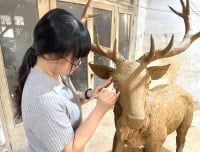
Panda, a 20-year veteran of bronze casting, is one of the co-founders and lead artisan of YouFine Art Bronze Foundry. Deeply rooted in the foundry, she has mastered every detail of the craft. Her expertise guarantees that each sculpture embodies the highest standards of quality and artistic integrity.