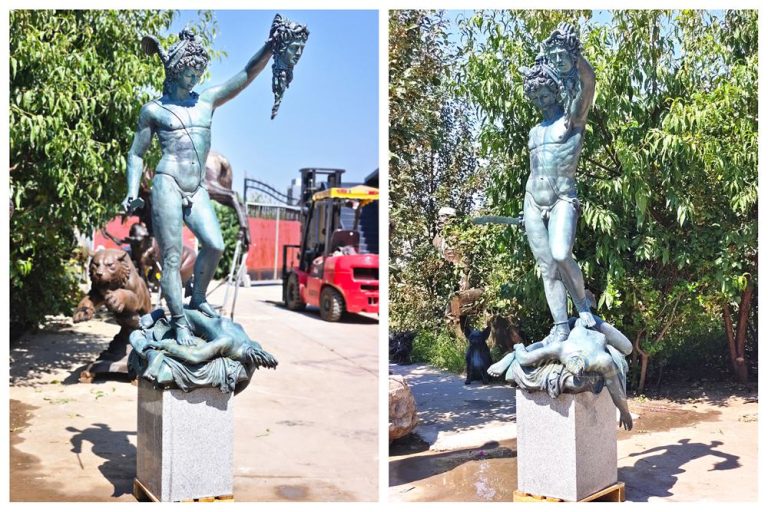

When someone asks us what size of bronze wildlife sculpture will suit an estate, we start with the site rather than a catalogue measurement. A sculpture may look beautifully detailed in a photograph yet feel too small across a broad lawn, or too close to a path once its base and antlers are included. If you are planning a deer, elk, moose or hunting scene, I hope this checklist helps you make the first decisions with confidence.
Our starting point: choose the main view, measure the space, test the outline at the site, and plan the base before approving the final dimensions. Your local installer or engineer should confirm the foundation and anchors for the actual location.

Start Where Your Guests Will First See the Sculpture
I suggest standing at the entrance drive, lodge doorway, terrace or path where the sculpture will first come into view. Take a photograph at eye level. Then take another from the place where people will see it most often. These two photographs tell us more than a close-up of an empty patch of ground.
Look behind the proposed position. Will a dark bronze figure disappear against trees? Will antlers overlap branches? Could planting hide the lower part of the work? For a hunting group, walk around the location: the composition should still make sense from the views that matter to you.
Measure the Space the Whole Sculpture Will Occupy
We need more than a target height to discuss scale. Please record the available width and depth, the distance to paths, walls and planting, and any gate or doorway the sculpture must pass through. Note slopes, steps and possible underground services. If a delivery vehicle or lifting equipment cannot reach the site, tell us early.
Ask for the proposed work’s overall height, width and depth, its base footprint and an estimated weight. The phrase “life-size” can be useful as a starting point, but different poses and bases occupy very different amounts of space. Projecting antlers or a raised limb also need clearance around a walking route.
Test the Scale Before You Commit
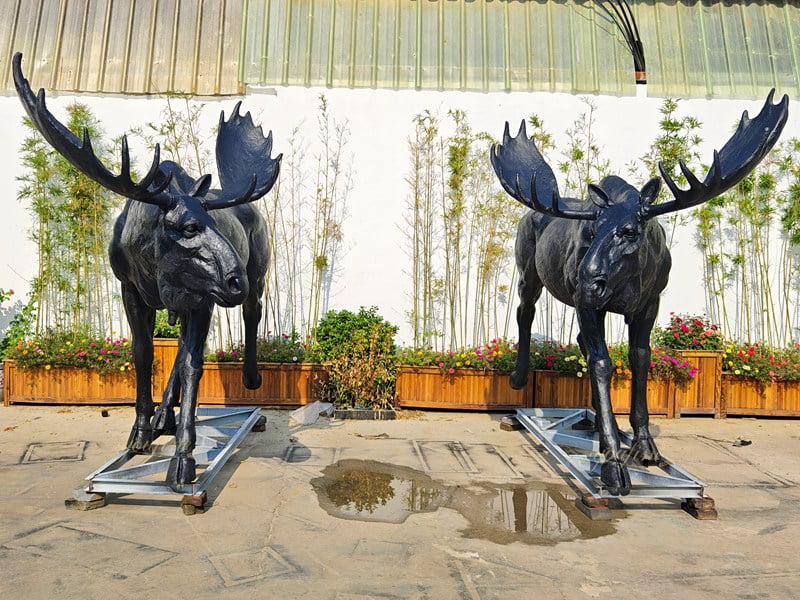
For a courtyard or lodge entrance, I pay particular attention to the relationship with doors, windows and people walking past. An open lawn is different: the sculpture must remain readable from farther away, and nearby trees or buildings can make even a large work seem small.
A simple on-site mock-up is often the clearest test. Mark the proposed height and width with temporary poles, tape or a cardboard outline. Photograph the mock-up from the viewing points you chose earlier. If the outline feels lost or crowded, it is much easier to change the plan now than after casting. For a large group, ask us for a drawing that includes both the figures and the proposed base.

Let the Subject Guide the Placement
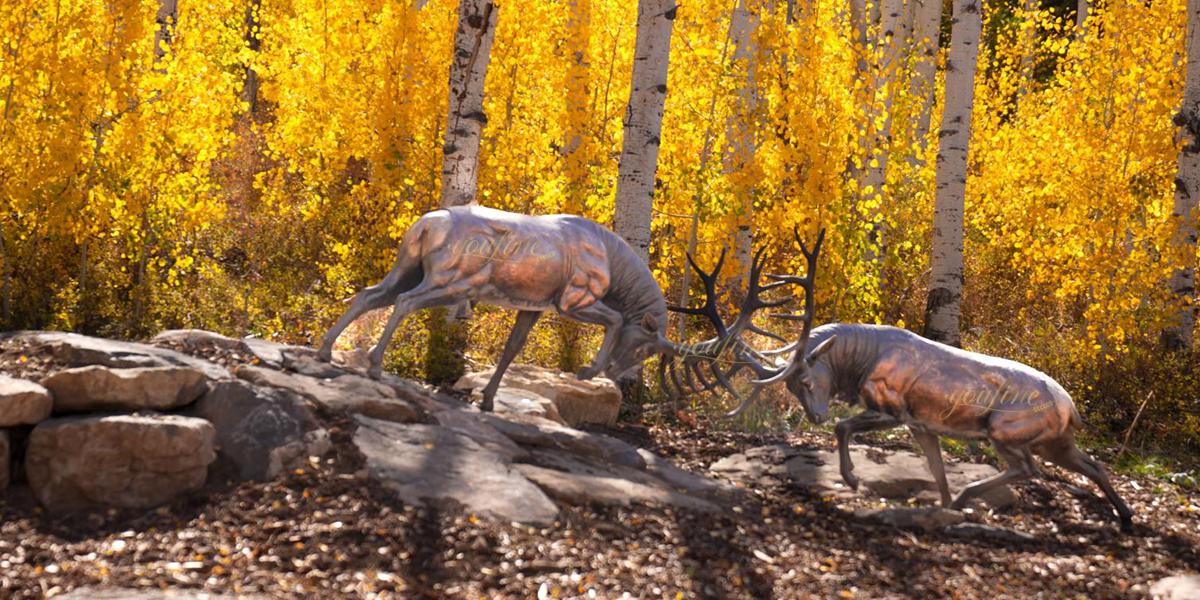
A standing stag or moose can become a clear focal point at the end of a drive. A fox, boar or bear may invite a closer look along a garden walk. A pair of animals or a hunting group usually benefits from more open space, so each figure remains visible. These are starting points, not fixed rules; your landscape and the sculpture’s pose should lead the decision.
Patina matters too. Brown and dark finishes may stand out against pale stone, while green can sit quietly among planting. We recommend comparing a proposed finish with photographs of the actual materials around it, and checking the view at different times of day. You can compare subjects in our bronze hunting sculptures collection.
Discuss the Base and Installation Early
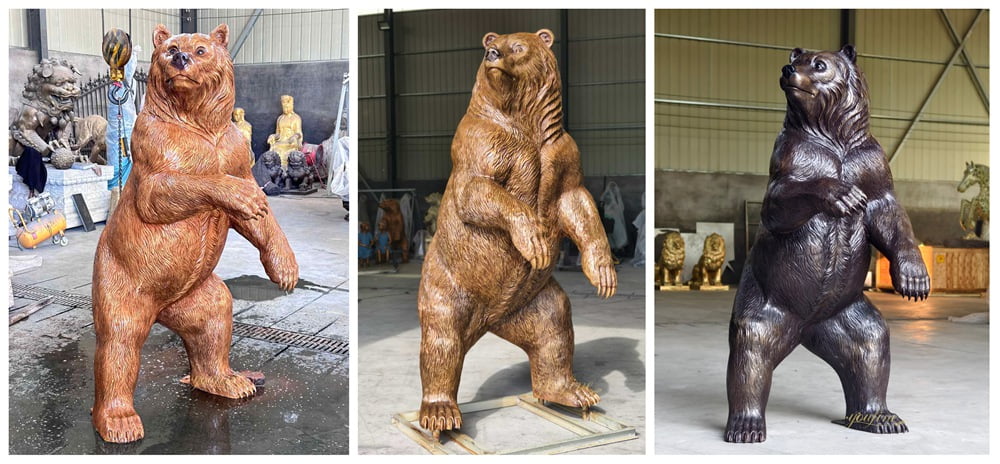
We can provide the sculpture dimensions and discuss how the work is intended to connect to a base. The foundation, anchoring and lifting method must then be assessed for the specific site. Soil conditions, exposure, access and public contact all matter. For a large or complex sculpture, please involve a qualified local installer or engineer before approving the installation plan.
Before production is finalized, ask for a drawing showing the overall dimensions, base footprint, anchor positions and intended viewing direction. This gives everyone a common reference and helps avoid last-minute surprises on site.
What to Send Us for a Useful Recommendation
- Photographs from the entrance and the main viewing points.
- Available width and depth, preferred height and any path clearance.
- Your preferred animal, pose or group composition, with reference images.
- Photographs of nearby stone, planting or architecture if you have a patina preference.
- The site location, climate exposure and any known delivery or installation limits.
With that information, we can discuss a suitable proportion and composition. If you would like to understand the making process, our guide to how bronze statues are made explains the Lost-Wax Cast stages. Final dimensions and installation details should always be confirmed for your particular sculpture and site.
Frequently Asked Questions
Is a life-size animal always the right choice?
Not necessarily. I would compare the actual dimensions and base footprint with the viewing distance and surrounding landscape before deciding.
Should the base be designed first?
We prefer to plan the sculpture and base together. The pose and weight affect the base, while the ground conditions affect the foundation and anchors.
Can the sculpture be viewed from every side?
Yes, if that is part of the brief. Tell us which views matter so we can review the composition from those directions before production is approved.
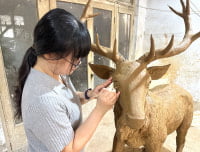
Panda, a 20-year veteran of bronze casting, is one of the co-founders and lead artisan of YouFine Art Bronze Foundry. Deeply rooted in the foundry, she has mastered every detail of the craft. Her expertise guarantees that each sculpture embodies the highest standards of quality and artistic integrity.